
Overview
What Is Flexible Stone Veneer for Exterior Walls?
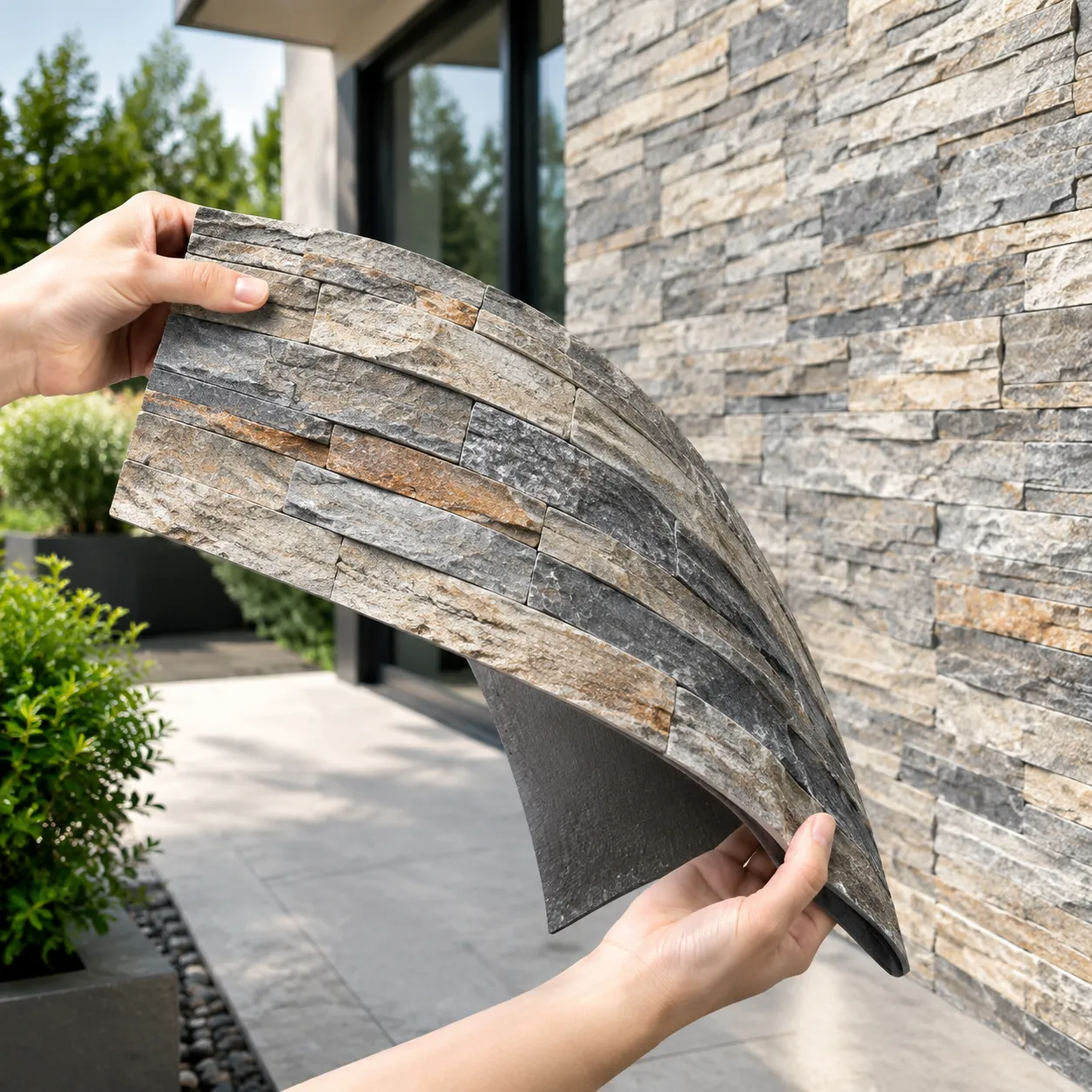
Flexible stone veneer is an innovative architectural cladding material that delivers the authentic look and texture of natural quarry stone without the structural load and rigidity of traditional masonry. Engineered specifically for outdoor surface applications, this modern material combines genuine stone aesthetics with advanced flexibility, making it ideal for exterior walls, curved structures, and high-performance facade panels.
Understanding the Composition of Flexible Natural Stone
Flexible stone veneer consists of a ultra-thin layer of natural stone bonded to a supportive, highly resilient backing layer.
-
- Top Layer: A thin slice (0.5mm to 1.5mm) of authentic natural stone, such as slate, quartzite, or sandstone, presenting 100% genuine stone textures and color variations.
- Fiberglass Mesh: Provides structural stability, tear resistance, and strength under temperature fluctuations.
- Polymer Resin Substrate: A high-grade polyester or polyurethane resin binder that grants structural flexibility and water resistance.
How Flexible Stone Veneer Is Manufactured
The production process leverages advanced pull-off extraction technology to capture real stone layers efficiently:
-
- Stone Layer Extraction: A thick slab or block of natural stone is treated with a specialized resin binder and reinforced with a fiberglass backing.
- Peeling & Separation: Once cured, the backing layer is pulled away, taking a microscopic, continuous slice of real stone with it.
- Quality & Finish Treatment: The flexible sheet undergoes precision trimming, quality inspection, and moisture-resistant sealing to ensure peak performance for exterior installation.
Key Benefits of Flexible Stone Veneer for Exterior Use
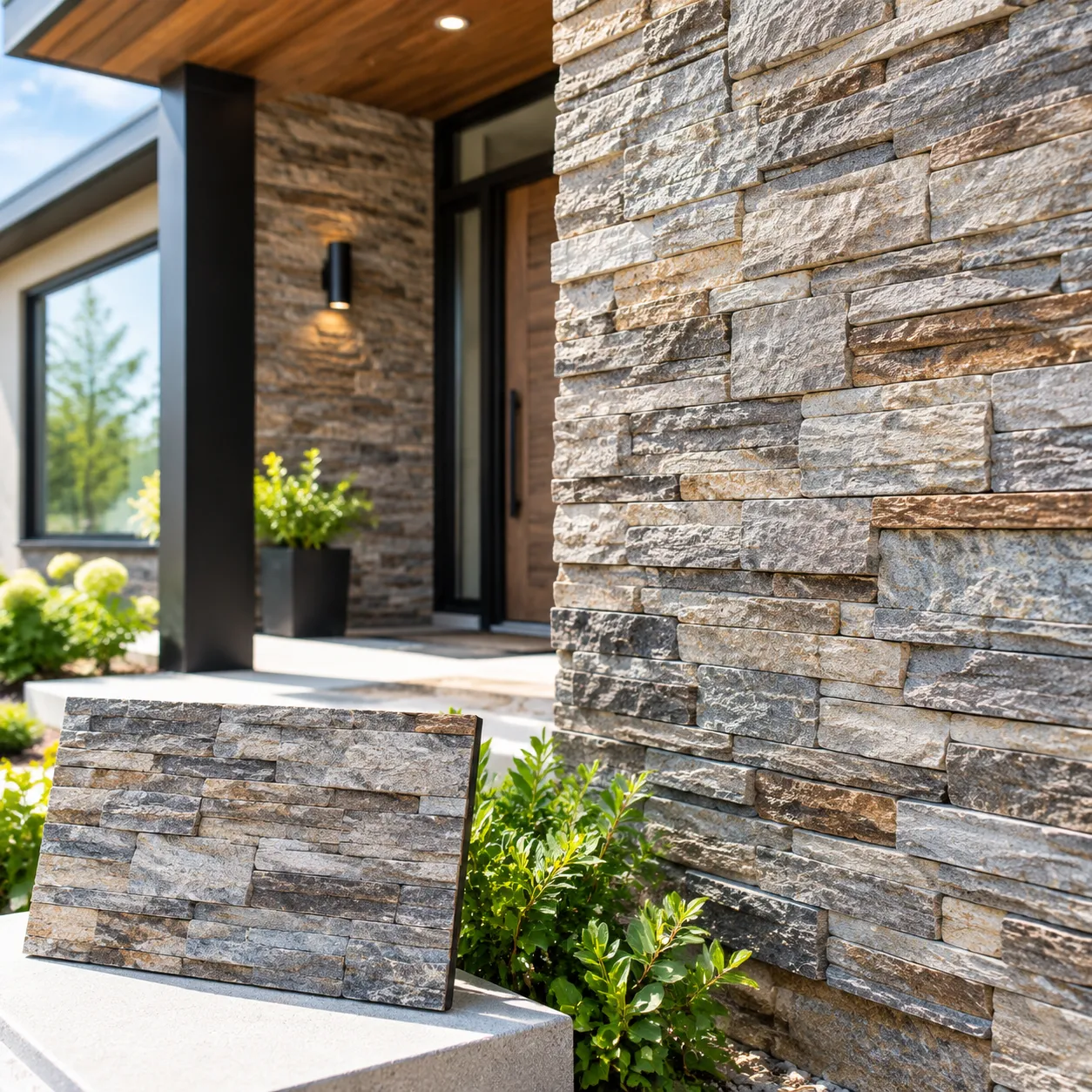
Upgrading an outdoor surface with real stone used to mean heavy equipment, high labor costs, and slow progress. Flexible stone veneer changes the game completely. I offer this material to clients globally because it delivers the exact look and feel of quarry-cut stone without the massive weight or installation headaches.
Ultra-Lightweight and Easy to Handle
Traditional stone slabs put a huge strain on shipping budgets and building structures. Flexible stone veneer strips away the unnecessary bulk while keeping the authentic stone face.
-
- Lower Shipping Costs: You can pack vastly more square footage onto a single pallet, cutting global freight expenses dramatically.
- Effortless Handling: Crews can move sheets around the job site by hand—no cranes, forklifts, or heavy rigging needed.
- Reduced Structural Load: Its minimal weight makes it safe for fast retrofits over existing facade panels without structural reinforcement.
Durable and Extreme Weather Resistance
Exterior materials need to survive tough environments. Backed by a high-strength fiber matrix, flexible stone handles weather extremes with ease.
| Weather Challenge | Performance of Flexible Stone Veneer |
|---|---|
| Freeze-Thaw Cycles | High elasticity prevents cracking during severe winter temperature swings. |
| Heavy Rainfall | Non-porous backing stops water penetration and protects underlying walls. |
| UV Exposure | Real natural stone surface will not fade, chalk, or discolor under harsh sunlight. |
| High Winds | Full-bed adhesive bonding keeps panels secure in strong storm zones. |
Natural Stone Aesthetics with High Flexibility
You never have to sacrifice genuine beauty for convenience. Because each sheet is pulled directly from actual natural stone, no two panels look identical.
-
- Authentic Texture: You get genuine depth, rich grain, and tactile relief on every sheet.
- Curves and Corners: Wraps effortlessly around curved architectural cladding, round pillars, and tight exterior corners without requiring complex wet-saw angle cuts.
- Seamless Integration: Blends smoothly into modern accent walls, patio features, and large-scale commercial facades.
Popular Types, Colors, and Finishes for Flexible Stone for Exterior
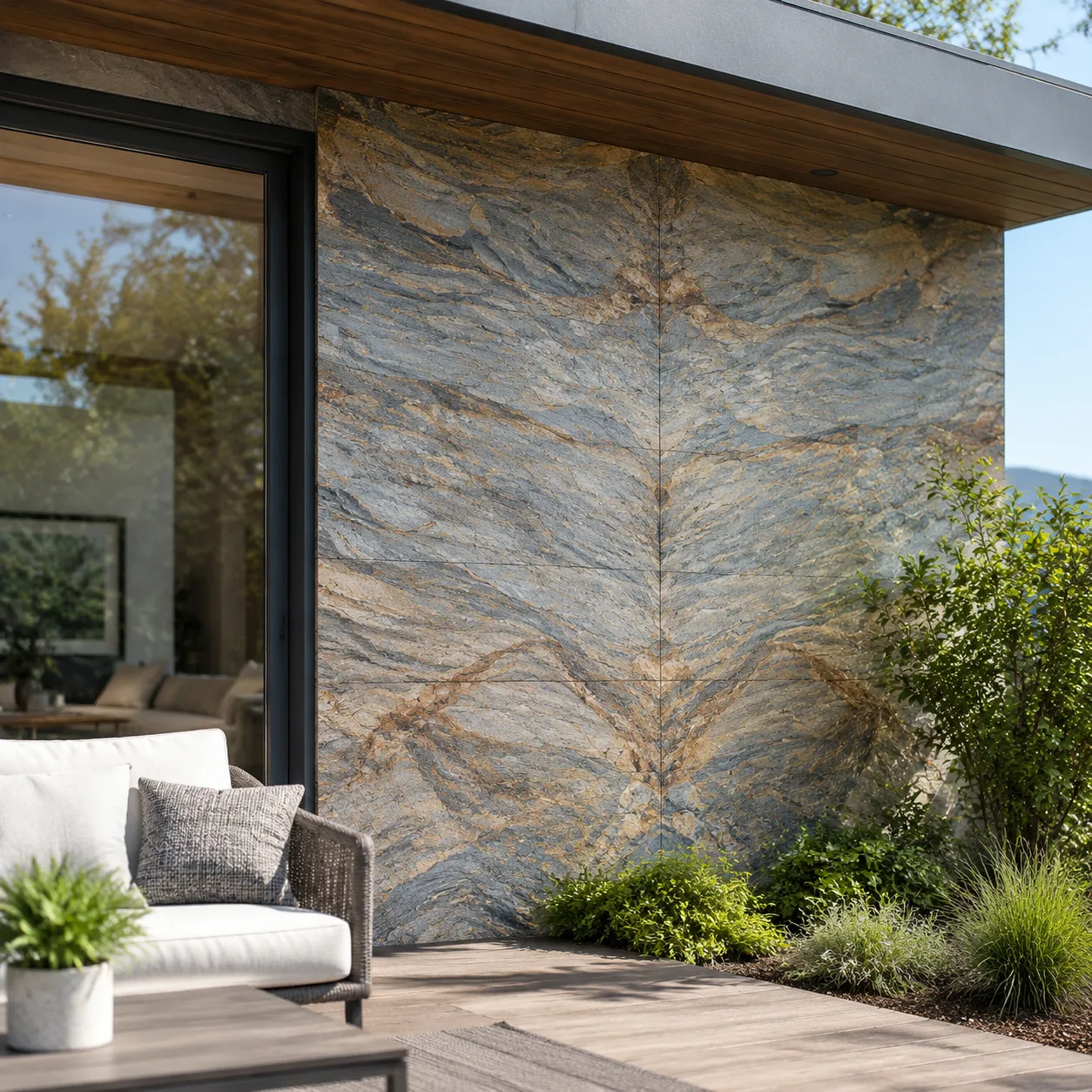
When selecting flexible stone for exterior projects, picking the right material type and visual style makes all the difference. We offer a versatile range of natural stone options designed to elevate any outdoor surface while standing up to tough weather conditions.
Slate, Quartzite, and Sandstone Veneers
Each natural stone backing brings its own distinct texture, strength, and aesthetic appeal to exterior flexible stone applications:
| Stone Type | Visual Characteristics | Key Exterior Features | Best Application Scenarios |
|---|---|---|---|
| Slate | Layered, earthy texture with a natural split face | High water resistance and excellent durability | Feature walls, accent columns, outdoor fireplaces |
| Quartzite | Subtle shimmer with a dense, fine-grained surface | Superior scratch resistance and UV stability | Modern facade panels, high-traffic entryways |
| Sandstone | Soft, warm, grainy texture with classic charm | Natural look that blends easily into landscapes | Patio walls, garden features, rustic architectural cladding |
Exterior Color Options and Book-Matched Patterns
We design our flexible stone for exterior walls to give you complete creative control over your building facade:
-
- Rich Color Palette: Choose from deep charcoal greys, warm copper tones, forest greens, muted tans, and clean whites. Because it uses real natural stone, every sheet features unique graining and tone shifts.
- Book-Matched Patterns: Mirror-image sheets create symmetrical, continuous veining across large surfaces, delivering a high-end, custom look for high-impact feature walls.
- Textured Finishes: Rough-split surfaces provide authentic depth, while smoother polished options offer a refined, contemporary look for modern architectural cladding.
Key Exterior Application Scenarios
I see flexible stone for exterior projects as a total game-changer for modern architecture. It gives you the raw, timeless look of genuine quarry stone without the weight or massive structural costs. Here is where this material excels on outdoor surfaces.
Building Facades and Exterior Feature Walls
Using flexible stone for exterior building facades lets you create striking architectural cladding that turns heads.
-
- High-Rise Facades: Light enough to install at great heights without reinforcing the structural foundation.
- Feature Accent Walls: Adds natural depth and textural contrast to entryways, exterior stairwells, and commercial fronts.
- Curved Surfaces: Bends effortlessly around rounded walls and arched entrances where rigid stone slabs fail.
Patios, Columns, and Outdoor Living Spaces
Upgrading outdoor living areas becomes simple and fast. Because it handles weather exposure well, it transforms everyday backyard features into high-end retreats.
| Application Area | Design Impact | Installation Advantage |
|---|---|---|
| Porch Columns | Wraps square or round pillars easily | No heavy masonry ties required |
| Outdoor Kitchens | Delivers a solid stone finish on islands | Fits tight corners without thick joints |
| Patio Backdrops | Creates an inviting, natural wall focus | Resists cracking from outdoor temperature shifts |
Suitable Substrates (Concrete, Brick, Cement Board)
You can stick flexible stone veneer to almost any stable outdoor surface. Proper backing ensures a permanent, weather-tight bond.
-
- Concrete & Masonry: Mounts directly over poured concrete, precast slabs, or old brick walls once cleaned and primed.
- Cement Board: Ideal for lightweight framing, exterior wall sheer panels, and outdoor kitchen structures.
- Metal & Exterior Plywood: Requires a suitable waterproof primer and polymer adhesive to accommodate thermal expansion.
Installation Guide for Exterior Flexible Stone Veneer
Installing flexible stone for exterior projects requires proper prep, correct bonding agents, and accurate techniques to achieve a long-lasting, weatherproof outdoor surface.
Surface Preparation and Substrate Requirements
A successful installation starts with a clean, flat, and stable surface. Flexible stone veneer adheres well to standard architectural cladding substrates, provided they are clean and structural.
| Substrate Type | Key Requirements | Pre-Installation Action |
|---|---|---|
| Concrete & Masonry | Fully cured, free of dust, oils, or loose debris | Power wash and allow complete drying |
| Cement Board | Properly fastened, flush seams | Fill joints with exterior mesh tape and mortar |
| Exterior Plywood / OSB | Rated for outdoor use, rigid, flat | Apply a suitable weather-resistant barrier (WRB) |
Adhesives and Waterproofing Techniques
Outdoor installations require high-performance, weather-resistant adhesives to withstand temperature swings and moisture exposure.
-
- Waterproofing Barrier: Apply an exterior-grade liquid waterproofing membrane over the substrate to prevent moisture infiltration behind the veneer.
- Adhesive Selection: Use a premium, flexible polyurethane adhesive, polymer-modified thin-set mortar, or high-tack exterior MS polymer sealant.
- Back-Butter Technique: Apply adhesive to both the substrate and the back of the stone sheet using a notched trowel to ensure 100% coverage and eliminate air pockets.
Step-by-Step DIY and Professional Installation
Follow this step-by-step process for a seamless exterior facade panels application:
-
- Layout & Dry Run: Lay out sheets on a flat surface to match colors, textures, and grain patterns before applying adhesive.
- Cutting & Trimming: Cut sheets to size using a standard hand saw, utility knife, or angle grinder fitted with a diamond blade.
- Adhesive Application: Spread adhesive evenly using a 1/8-inch or 3/16-inch notched trowel on both the wall and the sheet back.
- Sheet Placement: Press the stone sheet firmly onto the wall, starting from a bottom corner. Work outward to avoid trapping air.
- Rolling: Use a hand-held rubber seam roller to push firm, uniform pressure across the entire panel to secure the bond.
- Seam Joint Options: Butt sheets tightly together for a seamless appearance, or leave uniform gaps to fill with exterior silicone sealant or stone grout.
Maintenance and Care for Outdoor Flexible Stone
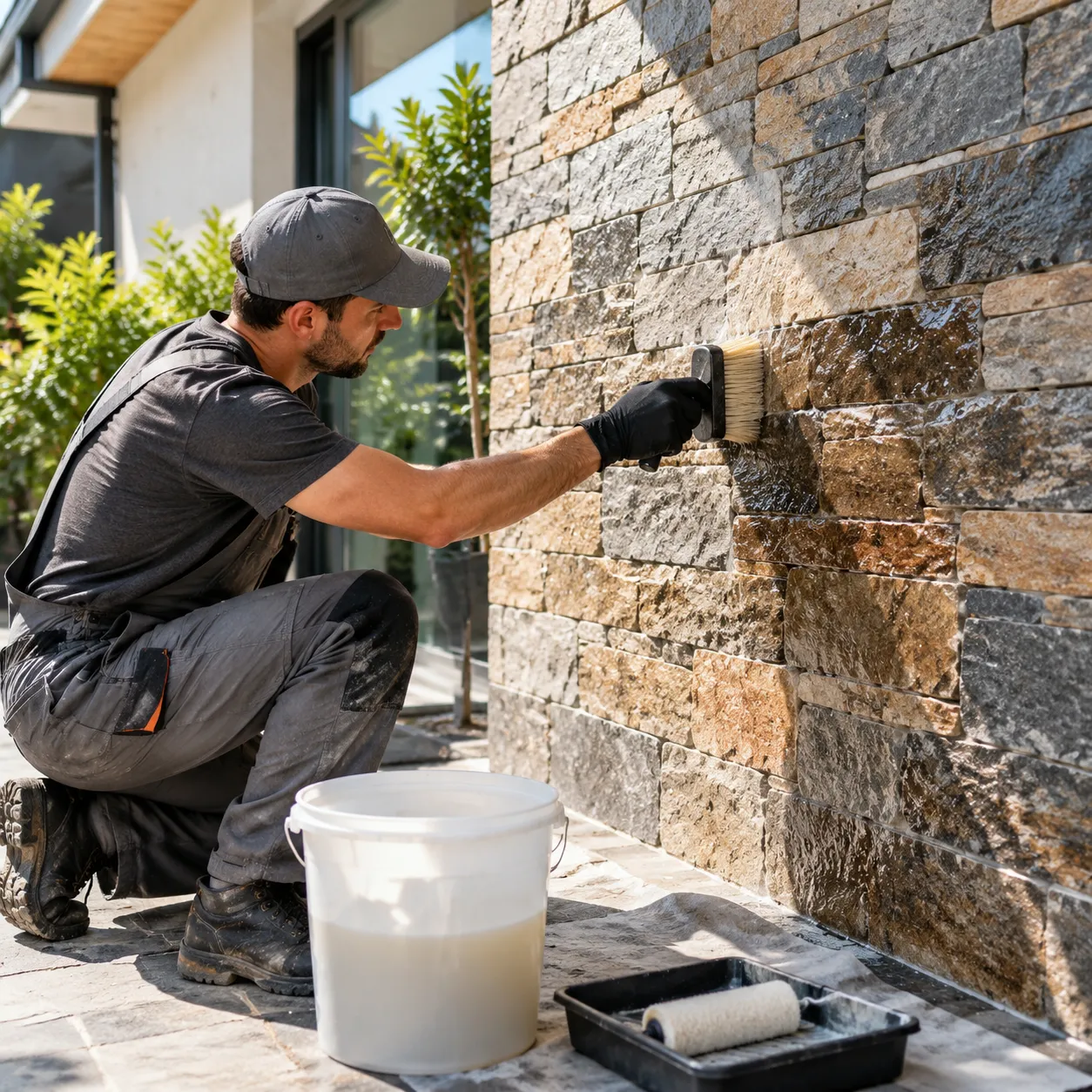
Taking care of flexible stone for exterior projects is straightforward and keeps your building looking brand new. While this stone veneer handles tough outdoor environments with ease, a quick maintenance routine prevents natural aging and protects your investment over time.
Sealing for UV and Moisture Protection
Applying a quality stone sealer is the most critical step for outdoor surfaces. It blocks water absorption, prevents mold, and protects against fading caused by intense sunlight.
-
- Apply right after installation: Once your## Maintenance and Care for Outdoor Flexible Stone
I've found that keeping flexible stone for exterior walls looking sharp takes far less effort than traditional masonry, but routine care is still essential. Because outdoor surface materials face constant exposure to sunlight, rain, and temperature swings, a simple maintenance routine protects your investment and ensures your architectural cladding maintains its natural look for decades.
Sealing for UV and Moisture Protection
Applying a high-quality sealant is the most critical step after installing flexible stone veneer outdoors. Natural stone layers have tiny pores that can absorb water, freeze, and trigger surface wear over time.
-
- Penetrating Sealers: I always recommend a breathable, silane-siloxane penetrating sealer for exterior facades. It soaks deep into the real stone layer without trapping moisture behind the sheet.
- UV Shielding: A solid sealer shields the natural mineral colors from fading under direct, harsh sunlight.
- Reapplication Schedule: Apply your first coat right after installation, then reapply every 3 to 5 years depending on your local climate and rainfall exposure.
| Protection Type | Recommended Product | Application Frequency | Key Benefit |
|---|---|---|---|
| Moisture Barrier | Penetrating Silane/Siloxane Sealer | Every 3–5 Years | Prevents water absorption and freeze-thaw cracking |
| Stain Resistance | Oleophobic Stone Sealer | Every 3–5 Years | Repels oil, dirt, and organic runoff |
Cleaning and Long-Term Preservation
Keeping your exterior walls clean doesn't require complex chemical treatments or heavy machinery. Simple, regular washing keeps grime from embedding into the stone's texture.
-
- Rinse Regularly: Hose down the facade panels with clean water every few months to clear off dust, pollen, and surface debris.
- Use Mild Soap: Mix warm water with a pH-neutral cleaner or standard dish soap for stubborn dirt. Scrub gently with a soft-bristle brush.
- Avoid Harsh Chemicals: Never use acid-based cleaners, bleach, or harsh chemical solvents. These strip the protective sealer and damage the natural stone face.
- Skip High-Pressure Washing: Avoid holding high-pressure power washers close to the stone. Intense pressure can lift the edges or erode the thin stone layer—stick to low pressure or standard garden hose sprayers.
Flexible Stone Veneer vs. Traditional Heavy Stone
When choosing an outdoor surface material for modern architecture, comparing flexible stone veneer for exterior walls against full-bed traditional stone comes down to efficiency, structural load, and total project costs. While both options offer authentic stone textures, flexible sheets eliminate the structural overhead and heavy machinery traditionally required for architectural cladding.
Cost Comparison and Shipping Savings
Upfront material costs tell only half the story. The true savings of flexible stone veneer for exterior projects lie in logistics and bulk transport efficiency.
-
- Lower Freight Expenses: Traditional stone blocks weigh up to 100 lbs/sq.ft., dramatically increasing freight charges. Flexible sheets weigh around 0.3 to 0.5 lbs/sq.ft., allowing up to 10× more coverage per standard shipping pallet.
- No Heavy Equipment: Eliminates the need for cranes, forklifts, or specialized wall anchoring hardware on site.
- Minimal Wastage: Flexible sheets bend around corners without cracking, cutting down on material scrap compared to brittle quarry stone.
| Cost & Freight Factor | Flexible Stone Veneer | Traditional Heavy Stone |
|---|---|---|
| Material Weight | ~0.3 – 0.5 lbs / sq.ft. | ## Flexible Stone Veneer vs. Traditional Heavy Stone for Exterior |
When planning an outdoor surface upgrade, choosing between flexible stone for exterior applications and traditional full-bed masonry comes down to weight, total project cost, and installation speed. While traditional natural stone offers proven durability, flexible stone veneer delivers the exact same authentic stone face with a fraction of the structural load and labor overhead.
| Feature | Flexible Stone Veneer | Traditional Heavy Stone |
|---|---|---|
| Average Weight | ~0.3 - 0.6 lbs/sq ft (1.5 - 3.0 kg/m²) | 25 - 50+ lbs/sq ft (120 - 240+ kg/m²) |
| Thickness | 1.5 - 2.0 mm | 1 - 6 inches |
| Substrate Requirements | Standard exterior cement board, concrete, brick | Reinforced footings, structural wall ties |
| Shipping & Logistics | Rolled or crate-packed in bulk (Low freight cost) | Heavy freight, flatbed trucks, crane offloading |
| Installation Speed | Fast (Cut with utility knife/shears, direct adhesive) | Slow (Requires skilled masons, wet mortar beds) |
| Overall Labor Cost | Low to Moderate | High |
Cost Comparison and Shipping Savings
Shipping heavy natural quarry stone across long distances dramatically inflates project budgets. Freight charges for heavy stone are calculated on sheer weight rather than physical volume, making transport one of the largest hidden expenses in exterior construction.
-
- Lower Freight Expenses: Because flexible stone for exterior walls weighs under 1 lb per square foot, you can ship thousands of square feet in standard crates or palletized rolls. Freight costs drop by up to 70–80% compared to shipping full-depth stone blocks.
- Minimal Jobsite Storage: Compact packaging reduces storage footprints on tight construction sites, eliminating the need for heavy material lifts or offloading cranes.
- Lower Substrate Prep Costs: Traditional stone requires expensive structural footings, steel lintels, and reinforced concrete backings to support the heavy dead load. Flexible veneer glues directly onto standard architectural cladding substrates, saving thousands on foundational prep work.