
Overview
True Unpatterned Purity (V1 Shade Consistency)
Most ceramic and porcelain tiles feature subtle veining, speckled textures, or intentional color shifts from box to box. By contrast, plain white porcelain tiles are manufactured to a strict V1 uniform shade rating, meaning every piece shares the exact same solid color tone with zero veining or surface pattern.
-
- Seamless Grid Alignment: Consistent coloration ensures that even large-scale installations read as one cohesive surface rather than a patchwork of mismatched tiles.
- Predictable Ordering: Contractors can pull tiles from multiple cartons during installation without worrying about blending high-variation dye lots.
Light Reflection & Spatial Expansion
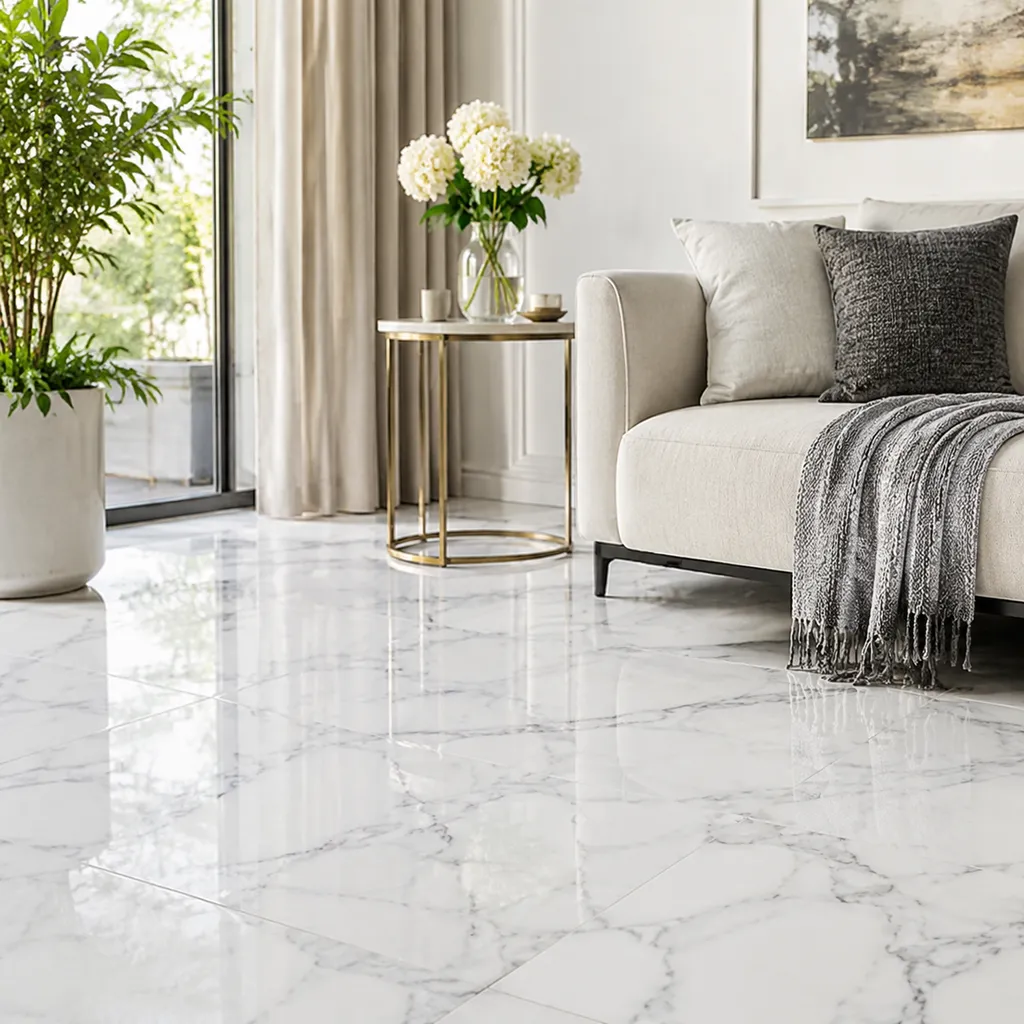
A bright white minimalist porcelain tile acts as a natural light amplifier, bouncing both daylight and overhead fixtures across compact or windowless rooms. In narrow hallways, powder rooms, and basement suites, this high light reflectance visually pushes walls outward and makes low ceilings feel noticeably higher. Pairing a monochromatic white wall and floor tile layout eliminates visual breaks at the baseboard line, creating an open, uninterrupted sense of space.
Color Undertone Transparency
Not every white tile reads the same once installed under your home's specific lighting. When selecting a solid white porcelain floor tile, pay close attention to the base undertone so it harmonizes with surrounding finishes rather than clashing with them:
-
- Cool Crisp White: Carries subtle blue or gray undertones that pair best with stainless steel appliances, chrome hardware, and modern cool-gray cabinetry.
- Warm Soft White: Features gentle cream or ivory undertones that soften the room and complement natural wood tones, brass fixtures, and warm LED lighting.
- Neutral Pure White: Balances both warm and cool spectrums, making it the safest choice when mixing different metal finishes and countertop materials.
Technical Specifications & Performance Ratings for Plain White Porcelain Tiles
When choosing plain white porcelain tiles, the technical numbers on the box tell you whether the tile will hold up to daily wear or fail under moisture and foot traffic. Because the reference source does not list specific factory test values for a single SKU, here are the standard industry benchmarks I look for when sourcing reliable solid white porcelain floor tile for residential and commercial builds.
| Specification | Standard Industry Benchmark | What It Means for Your Project |
|---|---|---|
| Body Type | Color-body or full-body vitrified porcelain | Chips blend into the white body instead of showing dark clay underneath |
| Water Absorption | 0.5% or less (ASTM C373 impervious rating) | Blocks moisture penetration in showers, wet rooms, and freeze-thaw zones |
| Wet Slip Resistance | DCOF 0.42 or higher (ANSI A326.3) | Safe traction for level interior floors exposed to water |
| Wear Rating | PEI Class 4 | Handles heavy residential traffic and moderate commercial foot traffic |
Material Composition: Full-Body and Color-Body Vitrified Porcelain
I always recommend vitrified color-body or full-body porcelain over standard white ceramic. High-temperature kiln firing fuses the clay and minerals into a dense, non-porous tile surface with consistent white pigment extending through the body. If a heavy pan drops on a pure white porcelain tile, a tiny nick will not expose a contrasting red or brown clay core.
Water Absorption Rate and Impervious Surface Rating (ASTM C373)
To qualify as true porcelain under ASTM C373 testing, a tile must have a water absorption rate of 0.5% or lower. That impervious density keeps water, soap scum, and spills sitting on top of the tile rather than soaking in. It also prevents moisture damage in steam showers and unheated entryways.
Slip Resistance (DCOF AcuTest) and Wet-Floor Safety
Buyers often worry that white floors turn into skating rinks when wet, and with high-gloss finishes, that concern is valid. For any slip-resistant white bathroom floor tile, check the Dynamic Coefficient of Friction (DCOF):
-
- DCOF 0.42 or higher: Meets the standard threshold for level interior spaces that get wet, such as bathrooms, kitchens, and mudrooms.
- Below 0.42 (typical for polished finishes): Best kept on shower walls, backsplashes, or dry low-traffic rooms where standing water is not an issue.
Abrasion Resistance (PEI Class 4 Traffic Rating)
A hardwearing floor tile needs surface durability to keep a bright white finish from dulling under shoe grit. I look for a PEI Class 4 rating on glazed white porcelain, which stands up to busy kitchens, hallways, entryways, and light-to-medium commercial spaces like boutiques or offices without showing wear paths.
Breaking Strength, Thickness, and Surface Durability
Standard floor-rated rectified white porcelain tile typically measures around 8 mm to 10 mm thick (roughly 5/16" to 3/8"), giving it strong resistance to cracking under heavy appliances and furniture loads. Pair that thickness with a dense vitrified body and flat subfloor prep, and the tile resists thermal shock, scratches, and household cleaning chemicals.
Packaging Logistics and Carton Coverage
Carton weight, piece count, and square-foot coverage vary by tile format—such as 12"x24", 24"x24", or large format white porcelain tile slabs—and are listed directly on each product's packaging label. Always verify the exact square footage per box before ordering, and add 10% to 15% extra to cover diagonal cuts, room corners, and future attic spares from the same dye lot.
Recommended Applications & Room-by-Room Suitability
Because plain white porcelain tiles rely on a dense, vitrified clay body rather than delicate surface coatings, I recommend them across nearly every indoor zone. You get a clean, bright backdrop that holds up to moisture, foot traffic, and daily wear without the upkeep of natural stone.
Bathroom Floors, Shower Walls & Wet Rooms
Bathrooms are the most common place I see homeowners install solid white porcelain floor tile. Its non-porous tile surface resists standing water, steam, and soap scum without needing chemical sealers.
Shower walls: Glossy or satin finishes bounce light around small enclosures and wipe clean easily.
Bathroom floors & wet rooms: Stick with a matte white porcelain finish so wet feet get reliable traction.
Kitchen Flooring & Seamless Backsplashes
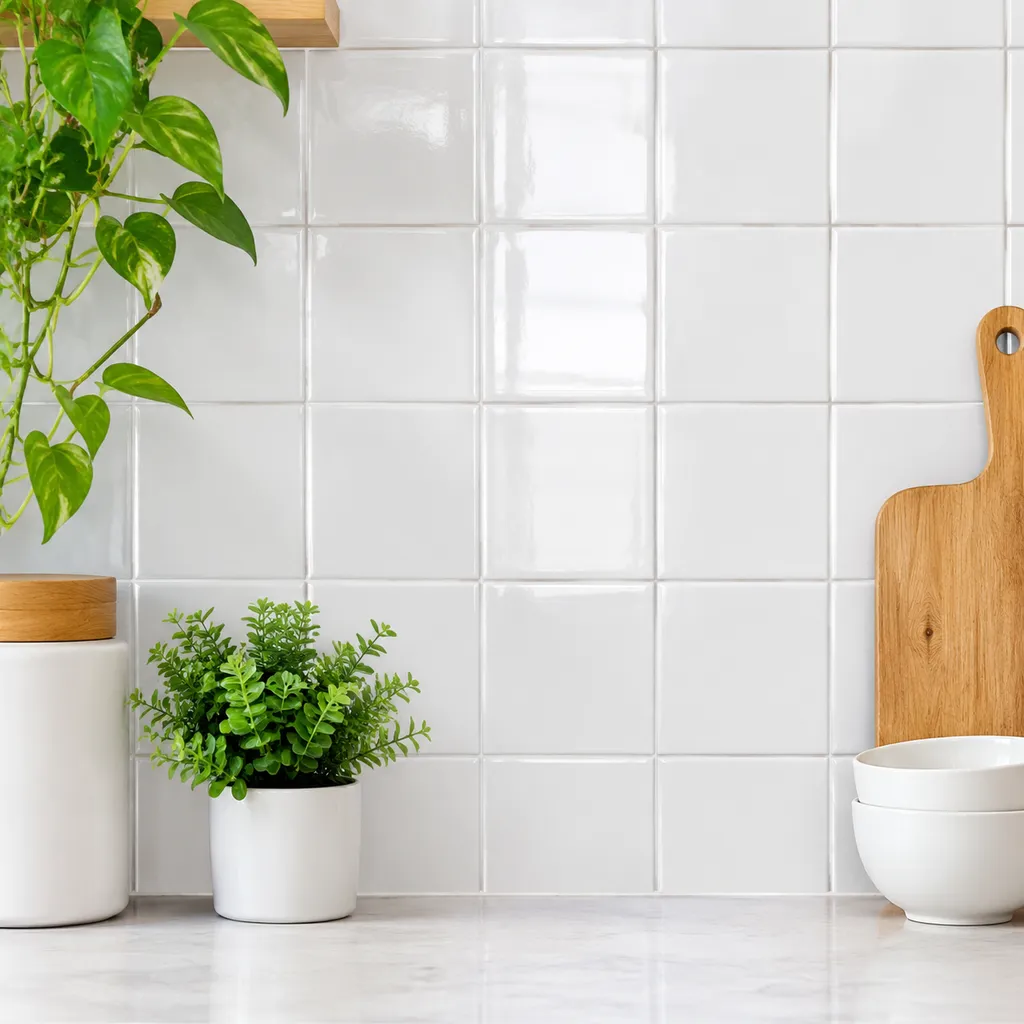
Kitchens put flooring through constant spills, dropped utensils, and heavy foot traffic. A hardwearing floor tile in pure white keeps the room feeling open while shrugging off coffee, oil, and acidic food splatters. Running the same tile up the wall as a backsplash creates a seamless look with minimal grout lines to scrub.
Living Areas, Hallways & Commercial Spaces
Large format white porcelain tile works well in open-concept living rooms, entryways, and light commercial spaces like boutiques or offices. Fewer grout joints give you modern white flooring that makes tight hallways and low-ceiling rooms feel noticeably wider. Just check that your subfloor is flat before laying larger slabs.
Radiant Floor Heating Compatibility
One of the biggest complaints about porcelain is that it feels cold underfoot in the morning. Because dense porcelain conducts and holds heat efficiently, plain white porcelain tiles pair seamlessly with electric or hydronic radiant floor heating systems. Once warmed up, the floor radiates steady, even heat across the room without warping or cracking.
Matte vs. Polished Plain White Porcelain: Choosing the Right Finish

Choosing between matte and polished plain white porcelain tiles comes down to where you install them and how much daily upkeep you want. Both finishes give you a clean, solid white surface, but they handle water, light, and foot traffic completely differently.
Matte White Porcelain Features & Best Zones
I always steer clients toward matte white porcelain for wet floors and high-traffic rooms. The non-reflective glaze hides footprints, smudges, and light dust far better than a glossy surface.
-
- Better Wet Traction: Matte finishes typically offer higher slip resistance for barefoot and wet areas.
- Soft, Glare-Free Light: Diffuses overhead lights and window glare without harsh reflections.
- Best Zones: Bathroom floors, shower floors, laundry rooms, mudrooms, and busy family kitchens.
Polished White Porcelain Features & Best Zones
A polished white porcelain tile is mechanically buffed to a mirror-like shine, which bounces light around tight or windowless rooms. Because the surface is ultra-smooth, it can get slick when wet and shows water spots or dark shoe scuffs more easily.
-
- Maximum Brightness: Reflects natural and artificial light to make compact spaces feel open.
- Easy Wipe-Downs: Splashes, soap scum, and cooking grease wipe right off the smooth glaze.
- Best Zones: Shower walls, kitchen backsplashes, powder room walls, and low-traffic dry living areas.
Side-by-Side Finish Comparison by Slip Resistance, Glare & Maintenance
| Feature | Matte White Porcelain | Polished White Porcelain |
|---|---|---|
| Slip Resistance | Higher traction; suited for wet and dry floors | Slick when wet; best kept on walls or dry, low-traffic floors |
| Light & Glare | Soft, diffused reflection with zero harsh glare | High-gloss mirror finish that amplifies room lighting |
| Daily Maintenance | Hides water spots, dust, and footprints well | Shows water droplets, smudges, and hair; needs frequent wiping |
| Scratch Visibility | Minimal; fine surface wear blends into the finish | Micro-scratches from grit can dull the shine over time |
| Ideal Placement | Bathroom floors, entryways, kitchens, commercial floors | Shower walls, backsplashes, feature walls, formal living spaces |
Plain White Porcelain Tiles: Installation, Grout Pairing & Care Instructions

Getting plain white porcelain tiles to look clean and stay level comes down to proper prep and the right setting materials. Because porcelain is dense and non-porous, standard adhesives will not bond reliably over time.
Subfloor & Polymer-Modified Thin-Set Mortar Requirements
A flat, rigid subfloor is non-negotiable—especially with large format white porcelain tile, where even minor dips cause noticeable lippage.
-
- Subfloor Prep: Ensure concrete slabs are cured, clean, and flat within industry tolerances (typically 1/8 inch over 10 feet for large formats). Over wood subfloors, install a cement backer board or uncoupling membrane first.
- Mortar Selection: Always use a polymer-modified thin-set mortar (ANSI A118.4 or A118.15). The added polymers provide the chemical and mechanical grip needed for low-absorption porcelain bodies.
- White Mortar Only: Always choose white thin-set over gray. Gray mortar can bleed through translucent glazes or shadow through light grout lines.
- Back-Buttering: Comb mortar onto the substrate in straight lines and skim a thin layer onto the back of each tile to achieve at least 80% coverage in dry areas and 95% in wet zones.
Rectified Edge Grout Width & Color Pairing Tips
Most modern rectified white porcelain tile features precision-cut edges that allow tighter joints than traditional pressed tiles.
| Grout Approach | Recommended Joint Width | Visual Effect & Practical Benefit |
|---|---|---|
| Monochromatic White | 1/16" to 1/8" | Creates a seamless, continuous modern white flooring or wall surface with minimal grid lines. |
| Warm / Soft Light Gray | 1/8" | Adds subtle architectural definition while hiding everyday foot traffic dirt far better than bright white grout. |
| High-Contrast Charcoal | 1/8" | Delivers a sharp graphic grid look, though it requires extra care during cleanup to prevent haze on matte surfaces. |
-
- Follow Industry Standards: Never butt rectified tiles tightly together with zero gap; maintain at least a 1/16-inch joint (or follow manufacturer minimums) to accommodate minor thermal expansion and slight size tolerances.
- Grout Formula: Use high-performance sanded, fine-aggregate, or stain-resistant urethane/epoxy grouts to prevent discoloration in wet or high-traffic areas.
Zero-Sealing Routine Maintenance & Daily Cleaning
Because vitrified porcelain has a non-porous tile surface, it naturally resists water, oils, and household stains without needing chemical sealers.
-
- Skip the Sealer: Do not apply topical or penetrating sealers to the porcelain body itself—they cannot soak in and will leave a hazy, sticky film on top. (If you use traditional cementitious grout, seal only the grout joints after curing.)
- Daily Sweeping: Vacuum with a hard-floor attachment or sweep with a soft-bristle broom to remove grit that could dull a polished finish over time.
- Routine Mopping: Clean with warm water and a pH-neutral tile cleaner, then dry or buff with a microfiber mop to prevent water spots on bright white surfaces.
- What to Avoid: Skip oil-based soaps, wax cleaners, and harsh abrasive pads, as they leave residue that attracts dirt or scratches the surface sheen.
Coordinating Trim, Mosaics & Project Essentials

Finishing a plain white porcelain tiles installation properly comes down to the details around edges, shower floors, and grout joints. Because specific trim SKUs and accessory dimensions vary by supplier, verify exact sizing and availability directly with your tile distributor before ordering.
Matching Bullnose Trim & Cove Base Molding
Raw porcelain edges are sharp and show the underlying tile body, so exposed borders need a finished transition piece.
-
- Bullnose Trim: Features a rounded, finished edge ideal for framing shower niches, wainscoting caps, and exposed wall perimeters without needing metal profiles.
- Cove Base Molding: Provides a curved transition between the wall and floor, making it easier to sweep and mop corners in bathrooms, laundry rooms, and commercial spaces.
- Shade Matching: Always order trim pieces from the same supplier and dye lot as your main field tile to keep the white tone consistent across edges.
Matte Mosaic Sheets for Sloped Shower Pans
Large-format field tiles cannot bend to follow the pitch of a shower floor toward the drain. Instead, pair your wall tiles with matte white porcelain mosaic sheets on the shower pan.
-
- Better Traction: The extra grout lines between small mosaic tiles naturally add grip underfoot on wet, soapy surfaces.
- Easy Slope Conformity: Mesh-mounted sheets flex smoothly over pre-sloped mortar beds without lippage or awkward diagonal cuts.
Recommended Grout Types for Narrow Rectified Joints
Precision-cut rectified edges allow for tight grout lines, which keeps a monochromatic white wall and floor tile layout looking clean and continuous.
-
- Unsanded vs. Fine-Aggregate Grout: Traditional sanded grout can scratch polished surfaces, while standard unsanded grout may shrink in wider gaps. High-performance, fine-aggregate cementitious grouts work safely in narrow joints without scratching.
- Stain-Resistant Formulas: On white floors, consider single-component urethane or epoxy-based grouts that resist moisture and discoloration without requiring regular sealing.
Frequently Asked Questions About Plain White Porcelain Tiles
Is plain white porcelain tile hard to keep clean on floors?
Porcelain itself is a non-porous tile surface with less than 0.5% water absorption, so spills and stains cannot soak in. While a solid white porcelain floor tile does show dark hair and tracked-in dust faster than speckled stone, a quick sweep and a damp mop with a pH-neutral cleaner takes care of it in minutes.
-
- Best finish for low daily maintenance: A satin or matte white porcelain hides footprints and water spots far better than a mirror-gloss surface.
- Grout tip: Pair your tile with a light gray or warm bone stain-resistant grout instead of pure snow-white grout to keep floor lines looking fresh.
What is the difference between rectified and pressed edges on white porcelain?
The difference comes down to how the edges are finished after the tile leaves the kiln, which directly impacts your grout joint width and final look.
| Feature | Rectified White Porcelain Tile | Pressed (Cushioned) Edge Tile |
|---|---|---|
| Manufacturing Process | Mechanically diamond-cut after firing for exact dimensions | Molded into shape before firing with natural kiln variation |
| Edge Profile | Crisp, sharp 90-degree corners | Slightly rounded or beveled edges |
| Recommended Grout Joint | Narrow 1/16" to 1/8" joints | Wider 1/8" to 3/16" joints |
| Visual Result | Seamless, modern white flooring with minimal grid lines | Traditional, softer tile grid layout |
Can I use polished white porcelain tile on a bathroom floor?
I generally advise against using standard polished white porcelain tile on wet bathroom floors unless the specific product carries a wet DCOF rating of 0.42 or higher. Glossy surfaces become slick when exposed to soap and water, so I recommend keeping polished tiles on shower walls and backsplashes while using slip-resistant matte white porcelain or small mosaics on the floor.
Does plain white porcelain require sealing before or after grouting?
No, vitrified porcelain never needs a surface sealer because its dense clay body naturally blocks moisture and stains. However, if you use a standard cement-based grout rather than an epoxy or urethane formula, you should seal the grout lines once they fully cure.
How much extra tile should I order for waste and cuts?
Always build an overage buffer into your order so you have matching V1 uniform white tile from the same dye lot for cuts, breakage, and future repairs:
-
- 10% extra: Standard straight-lay grid patterns in square or rectangular rooms.
- 15% extra: Diagonal layouts, herringbone patterns, large format white porcelain tile, or rooms with lots of angled walls and plumbing cutouts.