
Overview
Why Choose White Porcelain Tile for Your Kitchen?
Selecting the right surface material determines both the function and atmosphere of a culinary space. Installing white porcelain tile for kitchen floors and walls provides a high-performance foundation that handles intense daily use while maintaining a clean, upscale presentation.
Exceptional Durability and Stain Resistance
Kitchens demand materials that resist moisture, impact, and frequent spills. Porcelain is fired at extremely high temperatures, creating a dense, non-porous structure that outperforms standard ceramic options.
-
- Impervious to Liquids: Naturally resists water, cooking oils, wine, and acidic ingredients without deep staining.
- Scratch and Impact Resistance: Easily withstands heavy foot traffic, dropped utensils, and moving furniture.
- Hygienic Surface: The non-porous surface prevents bacteria, mold, and odor absorption, ensuring a safe food-preparation environment.
| Performance Metric | Porcelain Tile Standard | Practical Kitchen Benefit |
|---|---|---|
| Moisture Absorption | Extremely Low | Complete defense against standing liquid and deep stains |
| Surface Hardness | High Wear Tolerance | Protection against scratches, scuffs, and daily wear |
| Chemical Resistance | High Resistance | Unaffected by standard household and food acids |
| Maintenance Need | Minimal | Simple cleaning without special sealing routines |
Brightens and Visually Expands Kitchen Spaces
White surfaces optimize indoor lighting by bouncing both natural sunlight and artificial illumination across the room.
-
- Light Amplification: Illuminates shadowed corners beneath cabinetry and dark countertops.
- Spatial Illusion: Crisp white surfaces blur the visual boundaries of walls and floors, making compact or narrow kitchens appear expansive and open.
- Clean Ambience: Establishes an organized, pristine backdrop that highlights kitchen fixtures, appliances, and architectural details.
Timeless Aesthetic That Matches Any Decor
A neutral white palette acts as an enduring design anchor that adapts effortlessly to evolving interior trends.
-
- Universal Compatibility: Coordinates seamlessly with natural wood finishes, industrial stainless steel, or dark stone countertops.
- Cabinet Flexibility: Complements classic shaker cabinets, ultra-modern flat panels, and bold accent colors alike.
- Long-Term Design Value: Eliminates the risk of outdated color schemes, maintaining its market appeal and aesthetic value for years to come.
Popular Finishes and Sizes of White Porcelain Tile
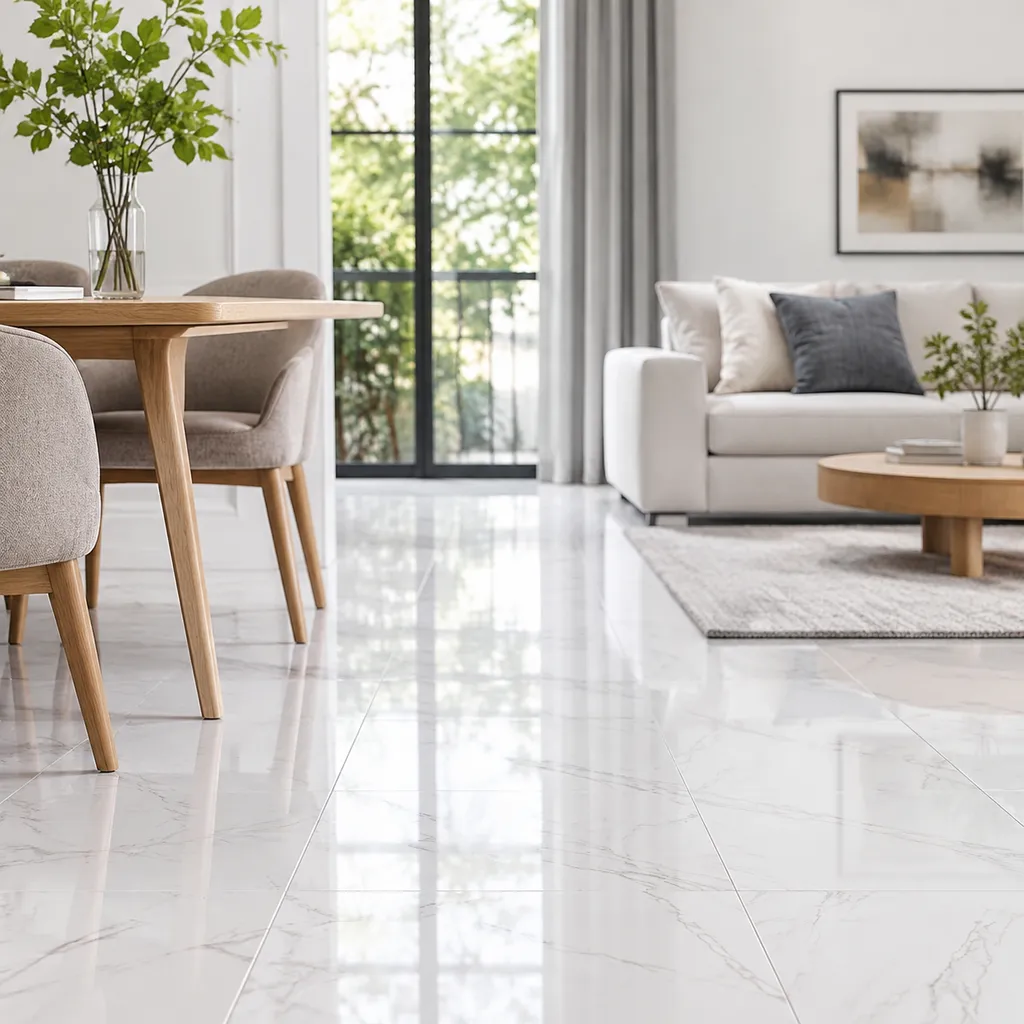
Selecting the right finish and format for your white porcelain tile for kitchen renovations defines both the daily maintenance routine and the visual scale of your space. We offer a curated range of dimensions and surface treatments tailored to withstand daily cooking demands while elevating your kitchen layout.
Polished vs. Matte White Porcelain
Choosing between a glossy or satin surface comes down to light, traction, and lifestyle:
-
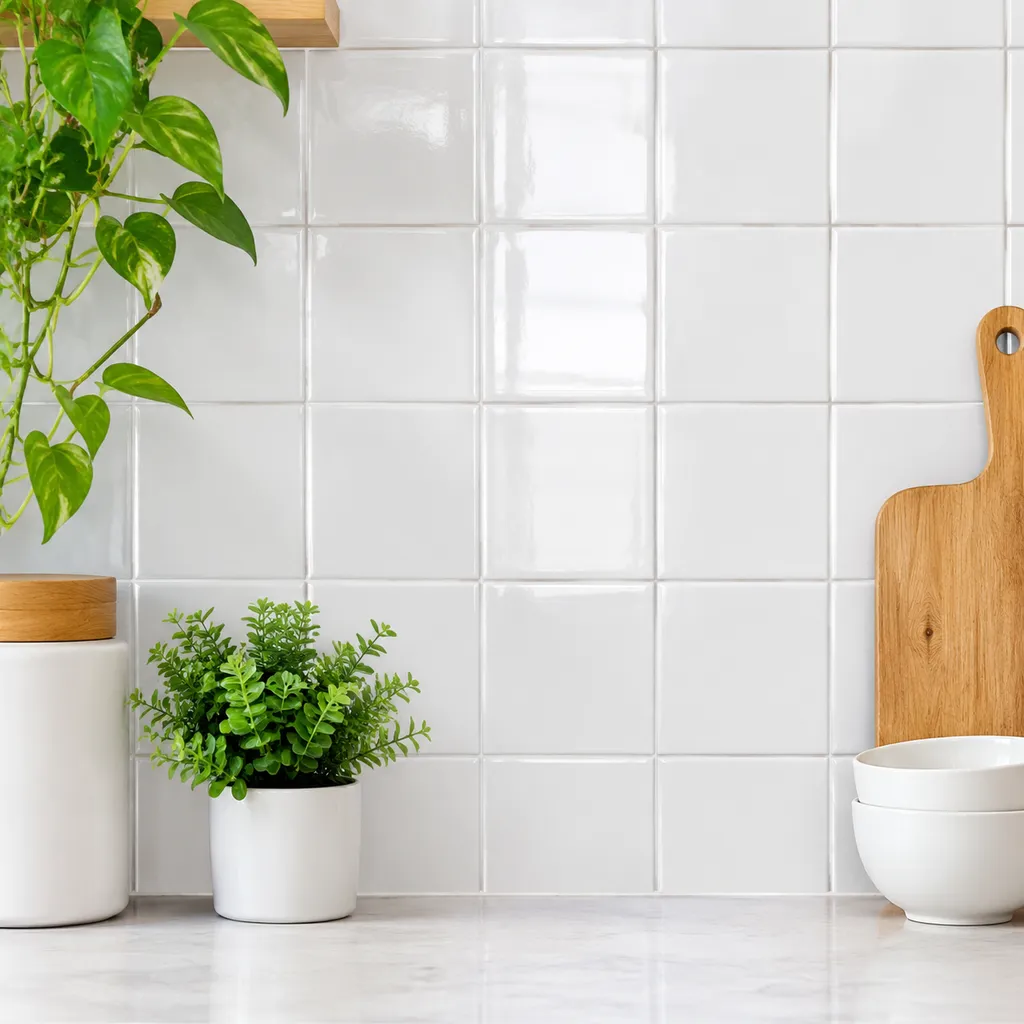
- Polished White Porcelain: Features a high-gloss, reflective surface that bounces ambient light across the room. It wipes clean instantly, making it an exceptional choice for walls and backsplashes.
- Matte White Porcelain: Delivers a smooth, non-reflective appearance that naturally conceals water spots, streaks, and dust. The subtle texture provides better slip resistance underfoot, making it the practical choice for busy kitchen floors.
| Feature | Polished Finish | Matte Finish |
|---|---|---|
| Best Application | Backsplashes, accent walls | High-traffic kitchen floors |
| Light Reflection | High (brightens spaces) | Soft, diffused light |
| Maintenance | Quick wipe-down; shows smudges | Excellent at hiding dust and footprints |
| Slip Resistance | Lower when wet | Higher natural grip |
Large-Format Tiles for Seamless Surfaces
Large-format white porcelain slabs and oversized tiles minimize grout joints across your floor or wall plane. Fewer grout lines create a clean, uninterrupted surface that makes compact kitchens feel expansive and open. Beyond the sleek architectural aesthetic, fewer seams significantly reduce the time spent scrubbing grout lines clean from kitchen grease and spills.
Textured and Patterned Subway Tiles
Classic white subway tiles remain a design staple, but contemporary variations offer fresh visual interest:
-
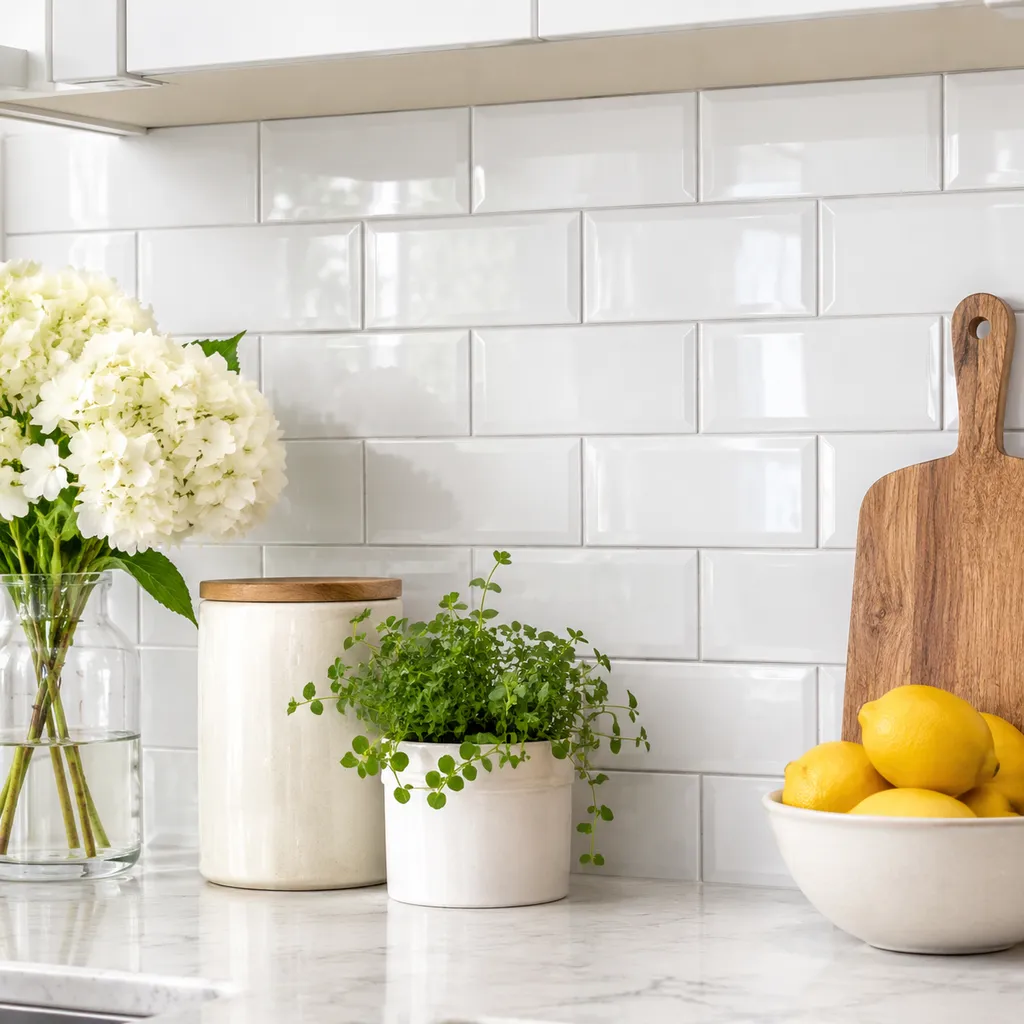
- Beveled Edges: Add crisp, three-dimensional shadow lines under under-cabinet lighting.
- Handcrafted Textures: Subtle undulations along the tile surface soften the look and catch light organically.
- Dynamic Layouts: Laying standard rectangular tiles in herringbone, vertical stack, or chevron patterns introduces modern movement to your kitchen backsplash while maintaining a clean, neutral white palette.
Key Kitchen Application Scenarios
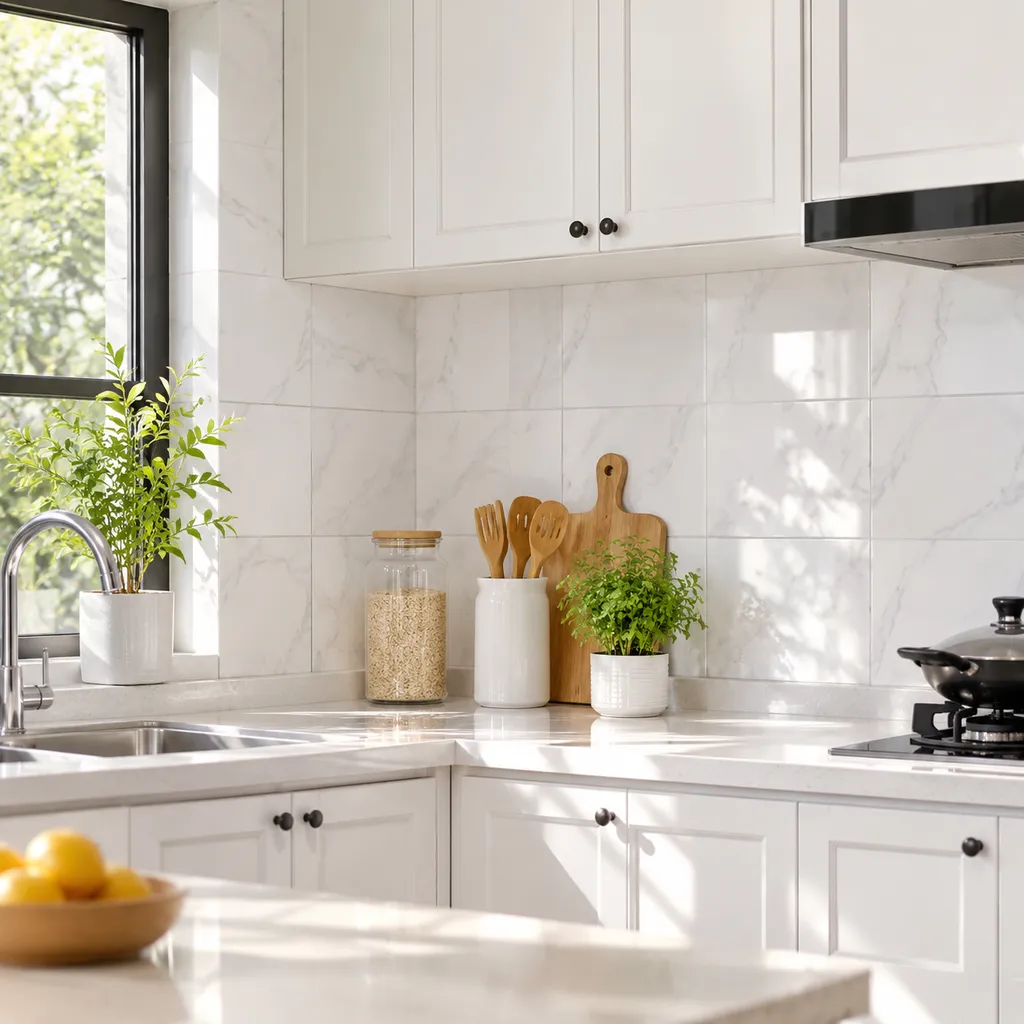
When you plan a remodel or build out a culinary space, material placement matters just as much as appearance. We rely on white porcelain tile for kitchen spaces because it delivers structural resilience in the most demanding zones of the home. From ground level to vertical prep areas, this material handles moisture, impact, and heat while maintaining a clean aesthetic.
High-Traffic Kitchen Floor Tiles
Kitchen floors take the brunt of daily living. Between heavy foot traffic, falling utensils, and inevitable liquid spills, your flooring must withstand continuous pressure without cracking, staining, or wearing thin.
-
- Impact Resistance: Porcelain is fired at extremely high temperatures, resulting in a dense, solid composition that resists chipping and surface scratching from dropped pots or moving furniture.
- Non-Absorbent Body: Because porcelain has an exceptionally low water absorption rate, spilled wine, coffee, or cooking oil cannot easily penetrate beneath the surface.
- Long-Term Stability: Unlike softer materials that cup or warp over time under heavy appliances, a properly installed porcelain floor remains flat, rigid, and balanced.
For busy layouts, opting for a matte or lightly textured finish ensures reliable traction underfoot without compromising on easy maintenance.
Easy-to-Clean Kitchen Backsplashes
The area behind your stovetop and prep counters faces daily exposure to steam, bubbling grease, and sauce splatters. Installing white porcelain tile for kitchen backsplash surfaces provides a protective shield that simplifies your end-of-day cleanup.
-
- Grease and Stain Barrier: Food residues sit on the surface rather than sinking into microscopic pores, allowing you to wipe away dried sauce and oil with a damp microfiber cloth and neutral cleaner.
- Thermal Endurance: Porcelain safely handles direct exposure to heat and steam behind high-output ranges and cooktops without blistering, scorching, or fading.
- Enhanced Brightness: Vertical white tile acts as a natural reflector, bouncing both under-cabinet task lighting and ambient light directly across your main food-prep zones.
Waterfall Islands and Countertop Accents
Kitchen islands serve as the visual and functional anchor of the modern layout. Extending white porcelain tile across countertop surfaces and cascading down the sides in a waterfall design delivers a cohesive, luxury presentation.
| Design Element | Porcelain Advantage | Daily Benefit |
|---|---|---|
| Waterfall Sides | Sharp, continuous surface transition | Guards island ends against kicks, scuffs, and pet activity |
| Island Tops | Highly scratch- and stain-resistant | Serves as an active prep station without demanding recurring surface sealers |
| Accent Walls | Expansive, cohesive vertical surface | Connects cabinetry, countertops, and flooring into a unified design |
Using durable white porcelain in these focal areas gives you the crisp, elegant look of high-end stone slabs while providing the everyday practicality required in an active cooking environment.
Inspiring Kitchen Styling Ideas with White Porcelain
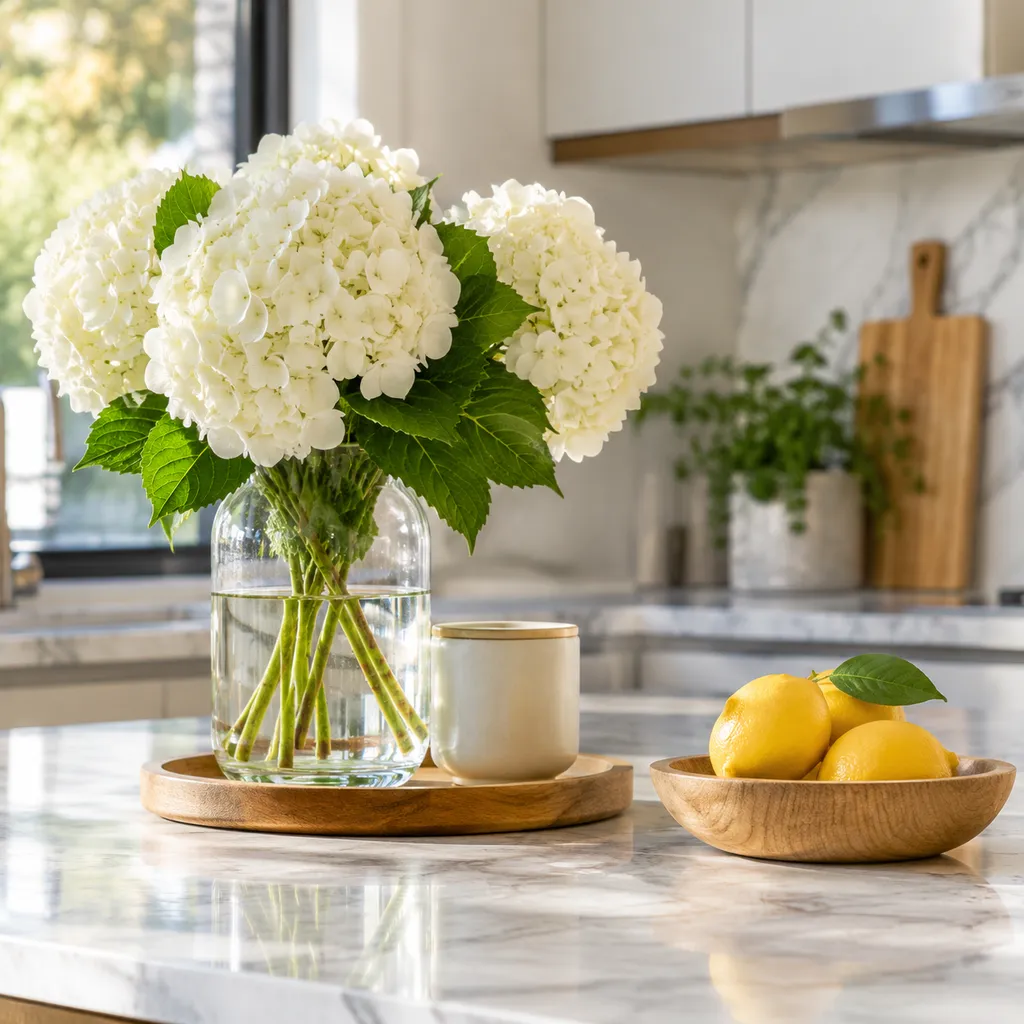
Using white porcelain tile for kitchen spaces opens up endless design possibilities. Whether updating a compact cooking area or outfitting an open-concept layout, we find that a white porcelain base offers the ideal blank canvas to showcase personal style, balance architectural elements, and elevate the entire room.
Sleek Modern and Minimalist Designs
For a clean, uncluttered layout, white porcelain delivers a seamless backdrop that makes cabinetry and appliances take center stage.
-
- Monochromatic Flow: Pair flat-panel white slab cabinets with large white tiles to create a uniform, uninterrupted aesthetic.
- Minimal Grout Lines: Use rectified edge tiles set tightly together to create a smooth, continuous surface across floors or walls.
- Integrated Textures: Introduce subtle surface textures or alternating matte finishes to add depth without introducing visual clutter.
Classic Elegance with Marble-Look Porcelain
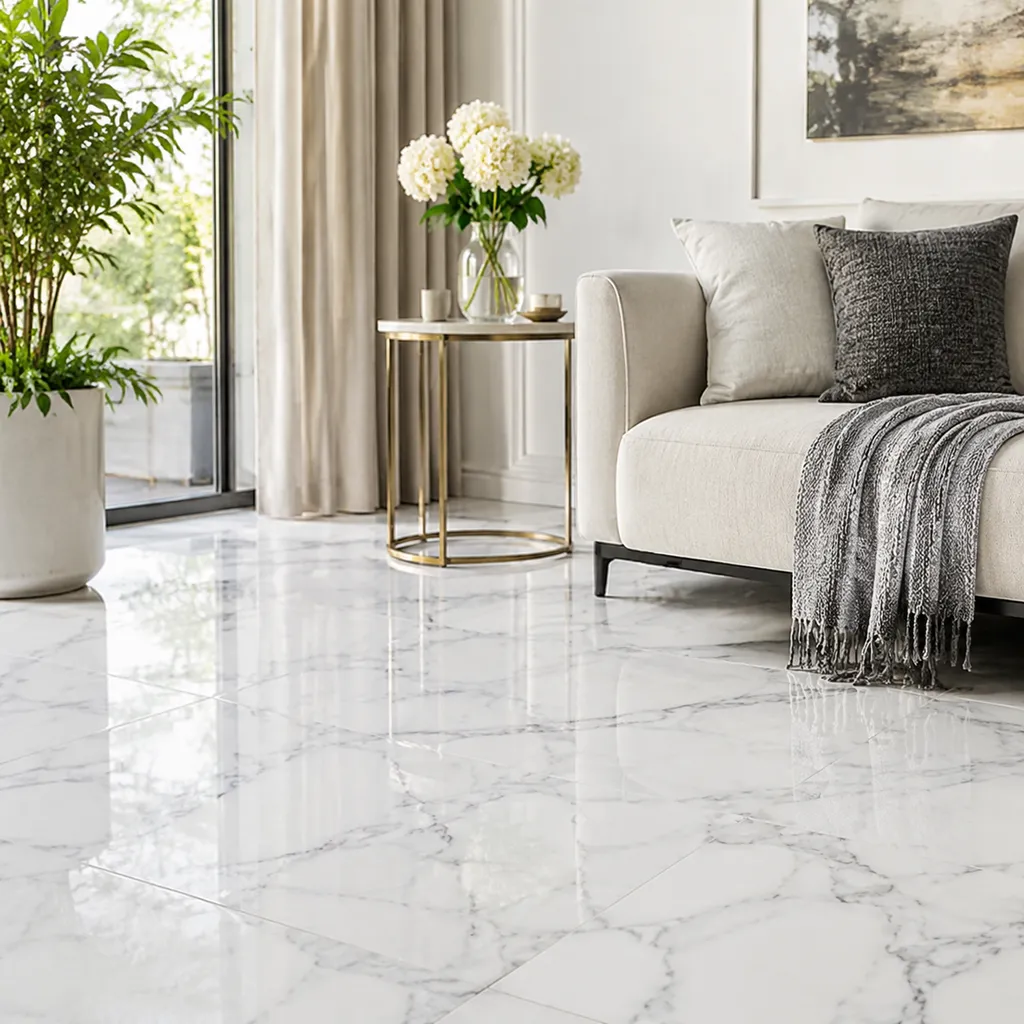
Get the timeless beauty of fine stone with all the everyday performance of porcelain. Marble-look white porcelain tile brings natural veining into the kitchen without the high maintenance of raw marble slabs.
-
- Soft Veining: Subtle gray or taupe veins complement transitional interiors, pairing effortlessly with shaker cabinets and warm wood tones.
- Bold Contrast: Pronounced, dramatic patterns turn a standard kitchen backsplash or island front into a standout visual feature.
- Hardware Pairings: Complement these tiles with warm brass, brushed gold, or polished nickel fixtures for an elevated finish.
High-Contrast Styles with Dark Cabinets and Accents
Bright white porcelain provides the ideal counterweight to bold, moody kitchen palettes. Grounding a dark color scheme with light-reflecting surfaces prevents the space from feeling enclosed.
-
- Tuxedo Contrast: Combine crisp white floor tiles with matte black, charcoal, or deep navy base cabinets for clean, dramatic distinction.
- Accented Grout: Match white subway or geometric formats with dark charcoal grout to highlight tile patterns and create industrial appeal.
- Balancing Natural Light: Install polished or satin-finish white tiles on surrounding walls to bounce light across darker finishes and fixtures throughout the room.
Cleaning and Maintenance Tips for White Kitchen Tiles
Keeping your white porcelain tile for kitchen spaces looking pristine does not require complicated steps or harsh chemicals. Because porcelain is naturally dense and non-porous, daily grease, sauce splatters, and foot traffic stay right on the surface. Consistent, simple care keeps your tiles looking fresh for years.
Daily Cleaning and Routine Care
A quick daily routine prevents dirt buildup and keeps surfaces bright:
-
- Sweep or Vacuum: Clear away loose crumbs, grit, and dust daily using a soft-bristle broom or a hard-floor vacuum setting.
- Mop with pH-Neutral Cleaners: Wash the surface using warm water and a neutral tile cleaner. Avoid harsh detergents that leave residues.
- Avoid Wax and Oil Soaps: Porcelain requires no waxes, sealers, or oil-based soaps. These products create a sticky film that actually attracts grime.
- Wipe Spills Promptly: Wipe up cooking oil, wine, and acidic foods like tomato sauce right away to keep maintenance effortless.
Preventing and Removing Grout Stains
While porcelain tile itself resists staining, grout lines require targeted attention:
-
- Seal Grout Joints: Apply a penetrating grout sealer after installation and refresh it periodically to lock out moisture and grease.
- Target Discoloration Gently: For localized stains, apply a paste of baking soda and water directly to the grout line, scrub lightly with a nylon brush, and wipe clean.
- Skip Aggressive Acids: Avoid heavy acid washes and undiluted bleach, which can erode grout lines and weaken the joint bond over time.
Maintaining High-Gloss and Matte Finishes
Different finishes need specific handling to preserve their original look:
| Finish Type | Maintenance Focus | Recommended Technique |
|---|---|---|
| Polished / High-Gloss | Preventing streaks and water marks | Dry the surface with a clean microfiber towel immediately after mopping to eliminate water spots. |
| Matte | Preventing oil and soap film buildup | Use a mild degreasing wash with warm water to lift cooking residues from the micro-textured surface, followed by a clean water rinse. |
Frequently Asked Questions About White Porcelain Kitchen Tile
Are white porcelain tiles hard to keep clean in the kitchen?
No, they are remarkably simple to maintain. Because porcelain is fired at high temperatures, it creates an extremely dense, non-porous surface that naturally resists daily kitchen spills like oil, wine, and coffee.
-
- Stain Resistance: Liquid stays on the surface rather than soaking into the tile body.
- Routine Care: A simple wipe with warm water and a neutral cleaner handles most daily messes.
- Grout Maintenance: The tile itself will not stain easily; sealing your grout lines once a year ensures the entire surface remains pristine.
Is matte or polished white porcelain better for kitchen floors?
For high-traffic kitchen floors, we consistently recommend a matte finish. While both options offer the strength of porcelain, their practical performance differs in busy cooking environments:
-
- Matte White Porcelain: Provides higher slip resistance underfoot and naturally masks dried water spots, flour dust, and grease streaks.
- Polished White Porcelain: Offers a brilliant, light-bouncing sheen that works exceptionally well on vertical surfaces like backsplashes, but it can become slippery when wet on a floor.
Does white porcelain tile make a small kitchen look bigger?
Yes, choosing a white porcelain tile for kitchen spaces is one of the most reliable ways to visually expand compact layouts.
-
- Light Reflection: White tiles bounce both natural and artificial light around the room, instantly eliminating dark corners and shadows.
- Visual Continuity: Using larger tiles reduces the number of broken grout lines, creating a unified surface that leads the eye outward.
- Neutral Canvas: The clean tone removes visual clutter, making compact kitchens feel open, bright, and uncluttered.