
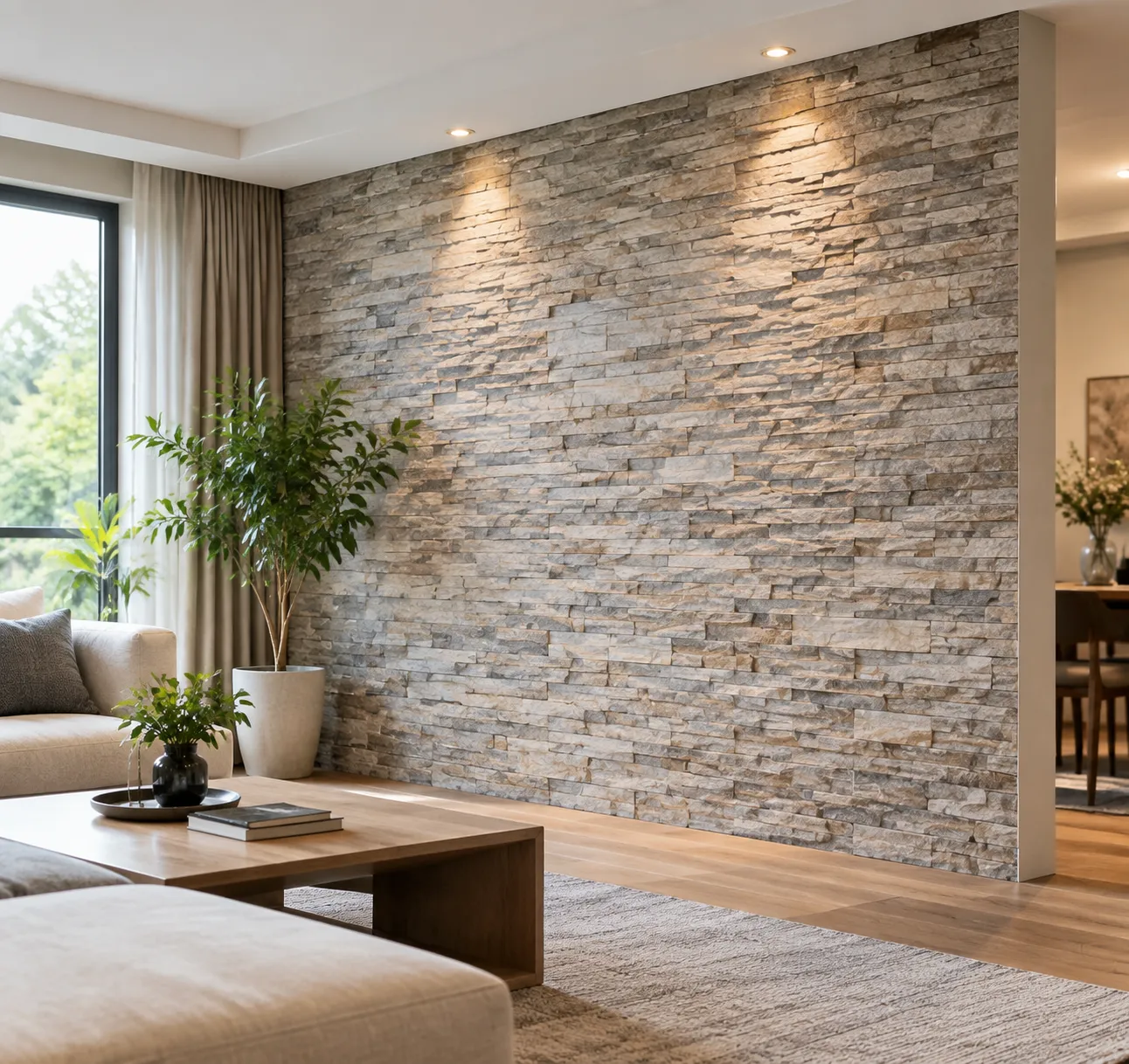
Technical Anatomy: What Is Flexible Stone Made Of?
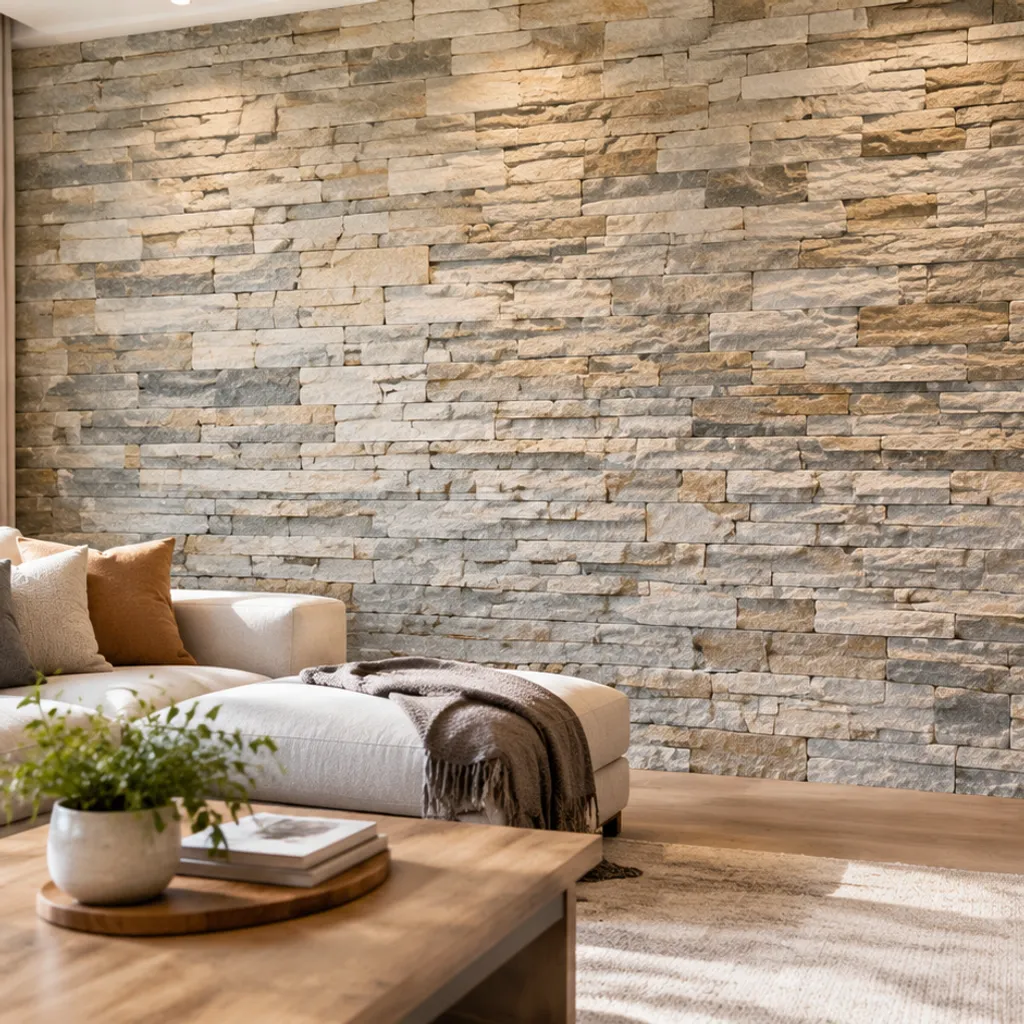
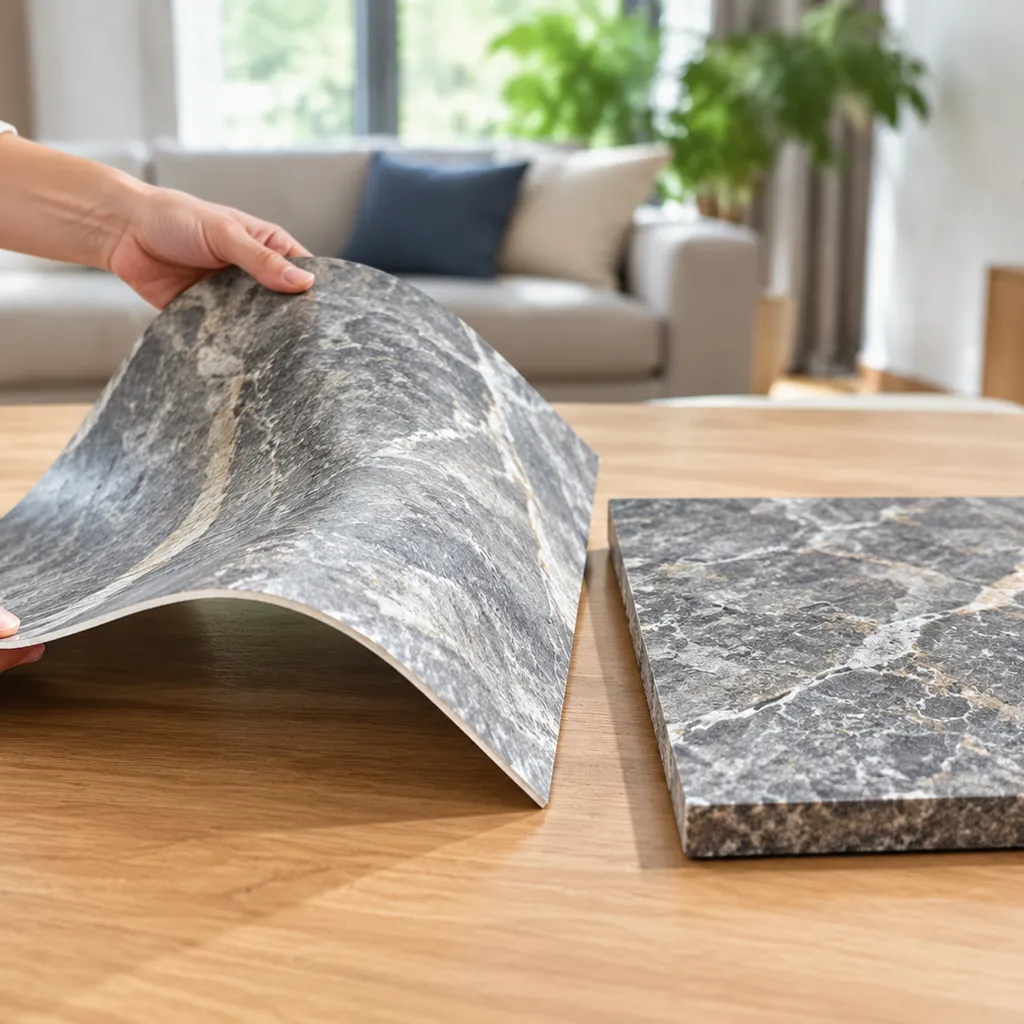
Flexible stone is an engineered architectural veneer derived by pulling an ultra-thin layer of natural stone directly from raw quarried slabs and reinforcing it with high-strength composite backing. Instead of relying on heavy, brittle dimensional masonry, this composite engineering yields an authentic natural stone texture combined with the bendable versatility of a laminate.
Layer Composition and Core Matrix Breakdown
We manufacture flexible stone veneer using a multi-layer composite system designed to prevent cracking while preserving the organic cleft of natural geological strata:
- Top Surface Layer (Natural Stone Face): A real stone surface—split from slate, quartzite, sandstone, or marble—measuring a fraction of a millimeter. It retains the mineral colors, veining, and 3D surface topography of raw rock.
- Core Bonding Matrix: A specialized thermosetting polymer resin formulated to seep into the microscopic fissures of the stone sheet, anchoring the minerals without dulling surface appearance.
- Reinforced Flexible Backing: An engineered fiberglass mesh, natural cotton fleece, or cellulose backing material that delivers tensile strength, structural tear resistance, and high-bend flexibility.
Physical Specifications, Thickness Ranges, and Weight Metrics
By replacing massive stone slabs with ultra-thin stone sheets, we dramatically lower structural dead load while streamlining architectural cladding.
| Specification Metric | Standard Parameter | Performance Detail |
|---|---|---|
| Total Thickness | 1.5 mm – 2.0 mm (approx. 1/16") | Ultra-thin profile for low-clearance retrofits |
| Areal Weight | 1.2 – 1.6 kg/m² (~0.25 – 0.33 lbs/sq ft) | Up to 90% lighter than traditional 20 mm slabs |
| Standard Dimensions | 1220 mm × 610 mm / 2440 mm × 1220 mm | Standard modular panels for interior and exterior walls |
| Minimum Bend Radius | Down to 350 mm (cold curve) | Easily wraps tight architectural columns and curved walls |
| Reinforcement Matrix | Fiberglass-reinforced polymer backing | Resists thermal expansion and mechanical stress |
Key Advantages of Flexible Stone Over Traditional Stone
When comparing traditional masonry with modern architectural stone veneer, the practical differences are massive. Traditional slabs bring heavy structural loads, slow fabrication, and rigid design limits. Flexible stone strips away these hurdles, giving you genuine stone textures with complete design freedom.
| Feature | Traditional Stone Slabs | Flexible Stone Veneer |
|---|---|---|
| Flexibility | Rigid, flat-surface only | Bends around curves and pillars |
| Weight | Heavy structural load | Ultra-lightweight |
| Handling | Heavy machinery, high breakage | Compact, crack-resistant sheets |
| Installation | Wet mortar, heavy anchors | Direct adhesive bonding |
| Eco Impact | High raw material consumption | Resource-efficient thin extraction |
Unmatched Flexibility for Curved Surfaces
I developed this material so architects and designers no longer hit roadblocks with curved walls, arches, or round columns. The bendable stone panels wrap effortlessly around tight radiuses without cracking or requiring custom diamond-cut profiling.
Dramatic Weight Reduction and Structural Load Benefits
Heavy cladding limits where you can use genuine stone. Because flexible stone veneer utilizes ultra-thin stone sheets with a fiberglass reinforced backing, it dramatically reduces structural dead weight. This makes it an ideal lightweight wall cladding choice for high-rise retrofits, ceilings, and surfaces that cannot hold massive physical loads.
Logistical Efficiency and On-Site Handling Advantages
Handling standard stone tiles costs time and invites breakage. My thin stone laminate sheets stack flat, pack tightly, and ship at a fraction of standard freight rates. On the job site, one worker can move dozens of panels easily without specialized cranes or forklifts.
Simplified, Tool-Friendly Installation Process
Mounting standard stone requires structural ties, wet mortar beds, and messy on-site cutting. In contrast, installing flexible stone veneer requires basic carpentry tools:
Easy cutting: Trim panels quickly using shears, utility blades, or a standard circular saw.
Direct bonding: Apply professional stone veneer adhesive straight to existing substrates.
Zero wet masonry: Cut out drying wait-times and heavy structural prep entirely.
Sustainable Extraction and Eco-Friendly Footprint
Achieving sustainable construction means using fewer raw resources. Instead of quarrying thick, solid blocks, flexible stone pulls multiple ultra-thin layers from a single natural slab. This thin-layer extraction method maximizes yield, drastically cuts extraction waste, and lowers transportation-related carbon emissions worldwide.
Popular Variations and Types of Flexible Stone
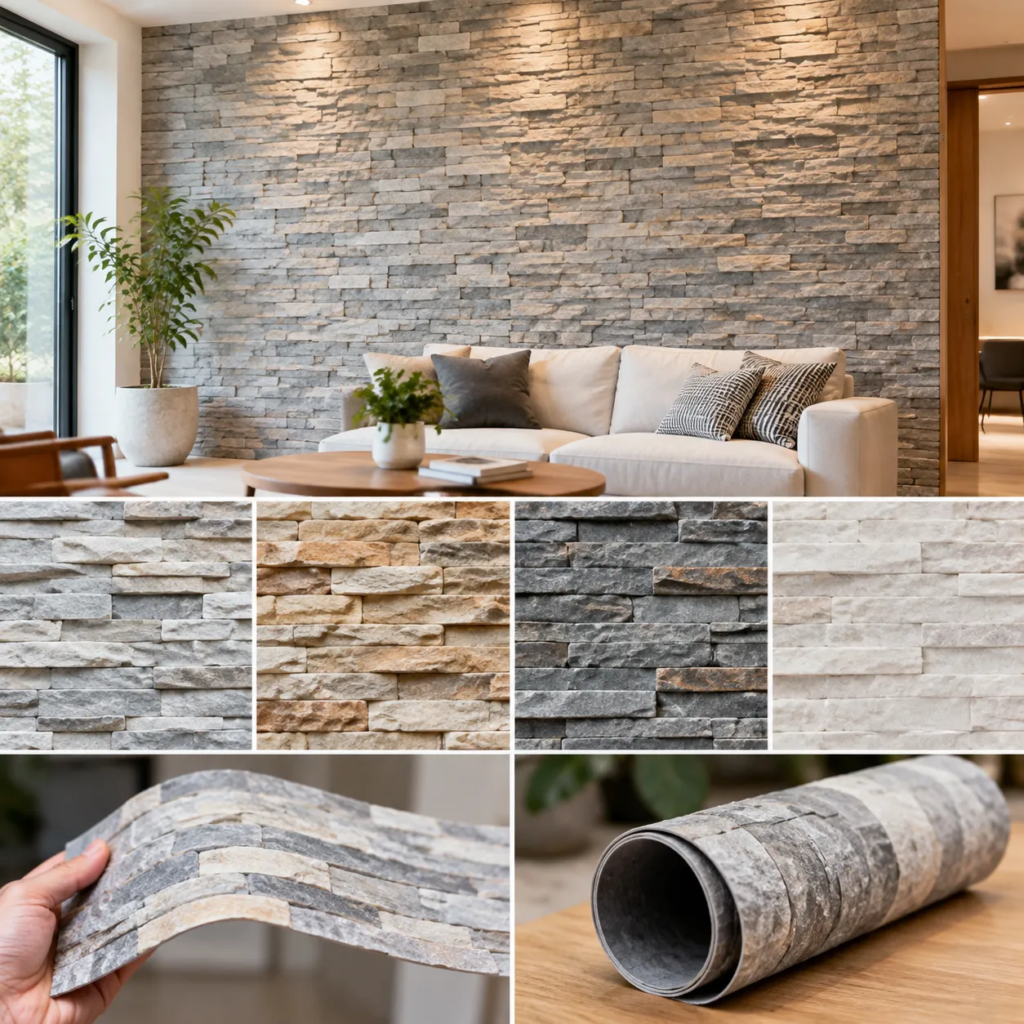
We design our flexible stone collections to solve specific architectural challenges, giving you distinct options based on lighting, flexibility, and structural needs. Understanding what is flexible stone in its different formats helps you select the right build for your project.
Standard Opaque Stone Veneer for Walls and Facades
Our standard flexible stone veneer uses a durable fiberglass reinforced backing combined with a natural stone texture face.
- Primary Use: Interior accent walls, exterior facade cladding, and column wraps.
- Key Benefit: Provides solid stone aesthetics with bendable stone panels that cut down weight and simplify handling.
- Surface Finish: Natural split-face textures including flexible slate veneer, quartzite, and sandstone.
Translucent Backlit Panels for Illuminated Feature Designs
We manufacture translucent stone veneer using clear resin backing that lets light pass through the natural stone layers.
- Primary Use: Backlit bar fronts, glowing reception desks, and illuminated feature ceilings.
- Light Source Pairing: Works seamlessly with flat LED sheet lighting or diffusers.
- Visual Effect: Highlights the natural mineral veining and depth when illuminated from behind, turning standard partitions into custom lighting elements.
Ultra-Thin Fabric and Cellulose-Backed Stone Sheets
For complex curves and tight radiuses, we engineer ultra-thin stone sheets with specialized backings.
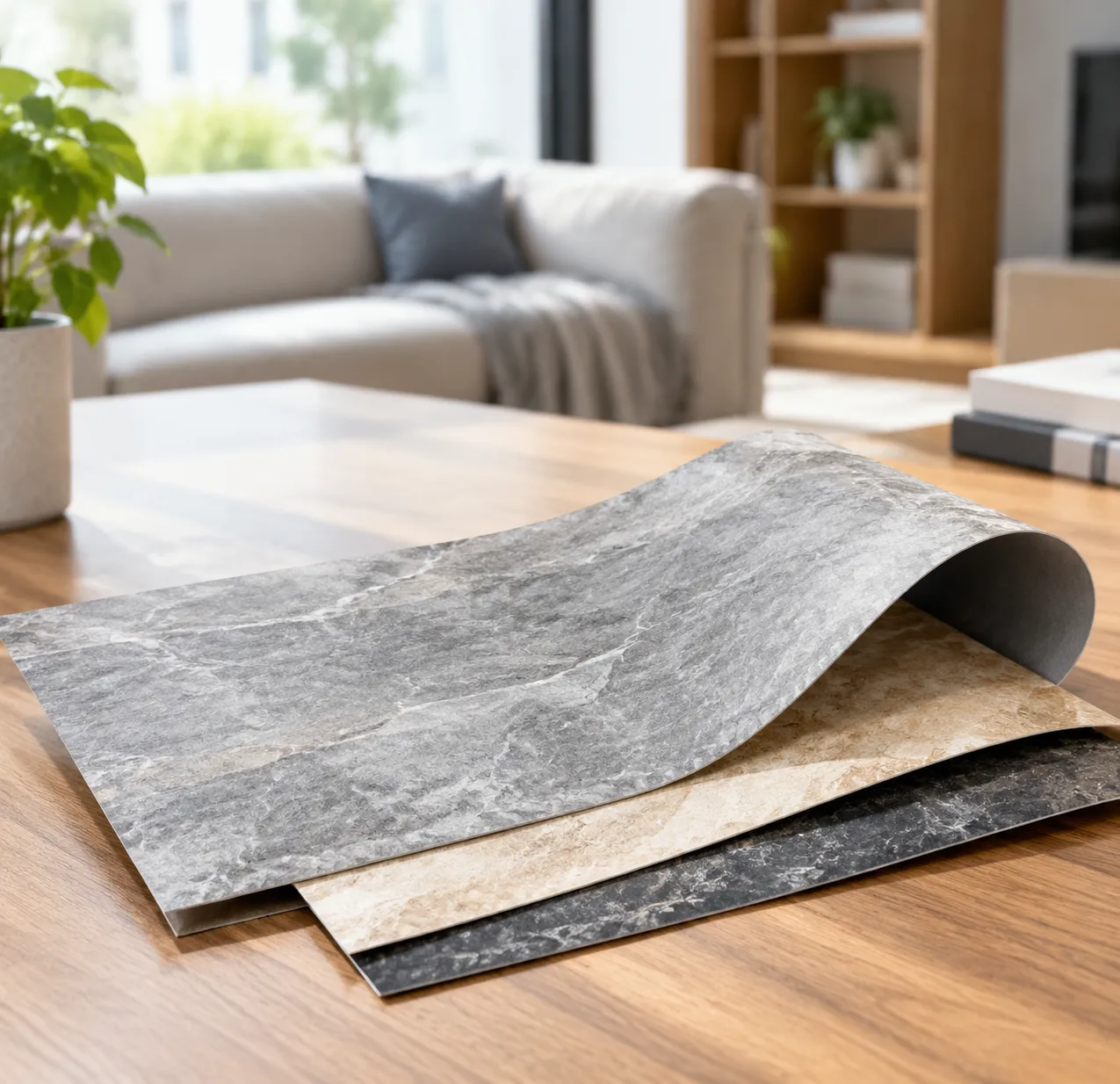
- Backing Options: High-tensile fabric, cotton weave, or cellulose backing for extreme flexibility.
- Primary Use: Millwork, cabinetry facing, curved furniture profiles, and bespoke retail fixtures.
- Workability: Cuts with standard utility knives or shears, functioning like a heavy-duty thin stone laminate that wraps seamlessly around tight edges.
Versatile Application Scenarios for Flexible Stone
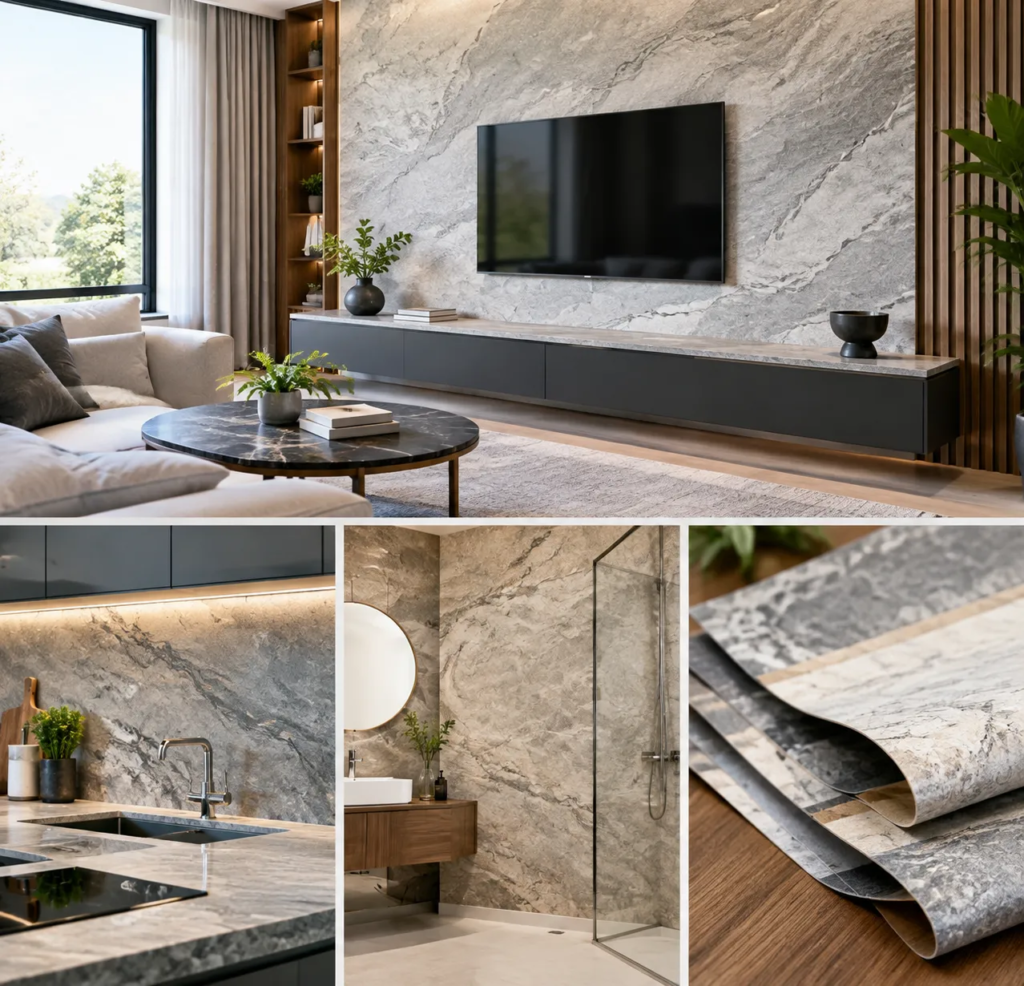
When asking what is flexible stone capable of, the answer lies in its ability to go where traditional slabs cannot. Because flexible stone veneer combines authentic stone texture with a lightweight, bendable backing, we use it across demanding structural and interior environments without the heavy support systems standard masonry requires.
Interior Architecture: Curved Walls, Fireplaces, and Millwork
Interior spaces benefit immediately from the pliability and tactile finish of ultra-thin stone sheets:
Curved Surface Cladding: We wrap columns, arched entryways, and undulating feature walls cleanly without facet cuts or visible seam breaks.
Fireplace Surrounds: The material handles thermal expansion effectively, giving fireplace bump-outs a floor-to-ceiling natural stone finish with minimal added dead load.
Bespoke Millwork and Furniture: We laminate bendable stone panels directly over cabinet doors, kitchen islands, reception counters, and acoustic wall panels for elevated, stylish surfaces.
Exterior Facades, Soffits, and Architectural Trims
For building exteriors, flexible stone delivers authentic rock aesthetics with dramatically lower engineering demands:
Exterior Facade Cladding: Mounts securely to standard exterior wall assemblies and insulation layers without heavy steel angle supports or structural ties.
Cantilevers and Soffits: The thin stone laminate adheres overhead to ceilings, eaves, and soffits where thick stone slabs pose serious weight and drop hazards.
Fascia and Trims: Cuts cleanly on-site to fit tight architectural details, parapets, and window returns.
High-Traffic Commercial, Hospitality, and Retail Spaces
In commercial environments, speed of installation and durability are critical:
Hotel Lobbies and Feature Walls: Enables rapid overnight retrofits directly over existing drywall, concrete, or tiled surfaces with zero demolition dust.
Retail Fixtures and Displays: Delivers natural stone texture to lightweight modular fixtures, elevator cabs, and brand feature backdrops.
Corridors and Entryways: Resists high daily impact and foot-traffic wear when coated with commercial-grade protective sealers.
Moisture-Prone Areas: Bathrooms and Shower Walls
Flexible slate veneer and thin stone laminates excel in wet environments when installed with waterproof structural adhesives:
Seamless Shower Enclosures: Large-format sheets cover full shower enclosures with minimal joints, eliminating mold-prone grout lines.
Vanity Backsplashes and Tub Surrounds: Provides an impervious, moisture-resistant surface that cleans easily and will not warp or delaminate.
Spa and Wellness Areas: Withstands humid, high-moisture air while delivering a calming, organic stone texture to wellness interiors.
Durability, Longevity, and Maintenance Standards of Flexible Stone
When you invest in flexible stone veneer, you get the natural visual appeal of real stone backed by engineered resilience. We design our lightweight wall cladding to withstand tough environmental factors while keeping daily upkeep straightforward and cost-effective.
Weather Endurance, UV Resistance, and Thermal Stability
Our bendable stone panels handle extreme climate shifts without cracking, warping, or fading. The integrated fiberglass and polymer matrix absorbs natural thermal expansion and contraction far better than rigid, heavy stone slabs.
- UV Stability: High-grade mineral layers resist discoloration and surface degradation from prolonged sun exposure.
- Thermal Expansion: Flexible backing materials accommodate temperature swings from freezing cold to intense heat.
- Moisture and Freeze-Thaw Resistance: Non-porous backing prevents water infiltration behind the panel, eliminating frost-related spalling.
| Environmental Factor | Performance Standard | Practical Advantage |
|---|---|---|
| Direct Sunlight | UV-resistant natural minerals | Retains original stone color over decades |
| Freeze-Thaw Cycles | Zero delamination | Ideal for exterior facade cladding in cold climates |
| High Heat & Humidity | Thermally stable backing | Does not warp or soften in tropical environments |
Fire Safety Compliance and Environmental Ratings
We prioritize structural safety and green building standards across all our architectural stone veneer collections:
- Fire Performance: Rated for commercial and residential interior finishes, offering superior flame-spread resistance and smoke suppression.
- Low VOC Emissions: Free from hazardous off-gassing, contributing directly to healthier indoor air quality in residential and hospitality builds.
- Eco-Footprint: Thin profile extraction uses significantly less raw stone per square foot than traditional masonry, reducing transportation emissions and resource depletion.
Routine Care, Cleaning Practices, and Resealing Schedules
Keeping your stone veneer in prime condition requires minimal effort and standard stone-safe products.
- Daily and Weekly Cleaning: Wipe the surface with a damp microfiber cloth and a pH-neutral stone cleaner. Avoid harsh bleach, acidic chemicals, or abrasive scouring pads that can compromise the surface seal.
- Protective Resealing: Apply a penetrating stone sealer after initial installation to guard against stains and moisture.
- Resealing Schedule:
- Interior Dry Walls: Reapply sealer every 5 to 7 years.
- Showers, Bathrooms, and Kitchen Splashbacks: Reapply every 2 to 3 years depending on moisture exposure.
- Exterior Facades: Reapply every 3 to 4 years to maintain peak hydrophobic protection.
Elevating Modern Architecture with YSQCERA Flexible Stone
We design our flexible stone solutions to give architects, developers, and builders complete creative freedom without the structural baggage of traditional masonry. By reimagining what is flexible stone and how it integrates into real-world builds, our team at YSQCERA delivers architectural stone veneer products that resolve complex surfacing challenges across global commercial and residential spaces.
Premium Raw Material Selection and Engineering Standards
Our manufacturing focus centers on durability, precision, and structural reliability. We enforce strict quality control at every stage to ensure each sheet performs under demanding conditions:
- Sourced natural mineral layers: We pull real natural stone textures directly from genuine stone blocks, capturing raw geological patterns.
- Fiberglass reinforced backing: Every panel utilizes high-strength backing systems that provide structural stability while remaining bendable.
- Tight calibration: We maintain exact thickness profiles across every batch, ensuring uniform weight distribution and seamless alignment during installation.
- Rigorous stress testing: Our panels undergo thorough performance checks for adhesion strength, flex fatigue, and surface cohesion.
| Feature | YSQCERA Standard | Conventional Cladding |
|---|---|---|
| Material Base | Natural stone with flexible backing | Thick, rigid quarried stone |
| Profile | Ultra-thin stone sheets | Heavy masonry blocks |
| Application Range | Curved walls, ceilings, flat facades | Flat load-bearing walls only |
| Handling | Fast, tool-friendly installation | Heavy equipment and wet mortar required |
Extensive Design Palette for Global Architectural Projects
We supply a vast catalog of lightweight cladding options tailored to diverse regional climates and architectural aesthetics worldwide:
- Natural slate and quartzite textures: Earthy, textured profiles for exterior facade cladding and high-traffic interior feature walls.
- Translucent stone veneer panels: Engineered for rear illumination, allowing light to highlight the natural veining in bars, receptions, and accent walls.
- Ultra-flexible fabric backings: Thin stone laminate sheets designed for precision millwork, rounded columns, and bespoke furniture surfaces.
- Modern minimalist finishes: Clean, contemporary colorways developed specifically to integrate with international retail concepts and luxury residential architecture.
Frequently Asked Questions (FAQs)
Is flexible stone made of real natural stone?
Yes, flexible stone veneer is made of 100% genuine natural stone. We pull a razor-thin layer directly from natural slate, quartzite, sandstone, or marble slabs. That authentic stone surface is then permanently fused to a reinforced fiberglass and resin backing. You get the genuine texture, mineral color variations, and tactile feel of quarried rock without the heavy bulk.
Is flexible stone waterproof and suitable for shower walls?
Yes, bendable stone panels perform exceptionally well in moisture-heavy environments like shower enclosures, bathrooms, and steam rooms.
- The resin backing acts as a built-in moisture barrier.
- Once installed with a waterproof substrate adhesive, you simply seal the surface with a quality penetrating stone sealer and seal all joint seams with waterproof silicone.
How do you cut and shape flexible stone sheets on-site?
You do not need heavy wet saws or masonry gear to work with these sheets on-site. Standard woodworking and hand tools handle the job cleanly:
- Straight cuts: Use a standard circular saw or angle grinder fitted with a continuous-rim diamond blade.
- Fine trimming and curves: Use heavy-duty sheet metal snips or a handheld rotary tool.
- Holes and cutouts: Use standard carbide or diamond hole saws for plumbing fixtures and electrical outlets.
What is the expected lifespan of flexible stone veneer?
When properly installed and maintained, flexible stone veneer lasts over 20 to 30 years. Because the top layer is authentic stone, it resists UV degradation, temperature fluctuations, and everyday surface wear just like traditional stone cladding. Periodic application of a standard stone sealer keeps the surface protected and looking pristine for decades.