
Understanding Flexible Stone vs Traditional Stone Materials
Architectural surfaces are evolving rapidly. Choosing between modern flexible stone and traditional stone materials defines not only the visual character of a project but also its engineering feasibility, structural load, and installation speed.
What Is Flexible Stone Veneer?
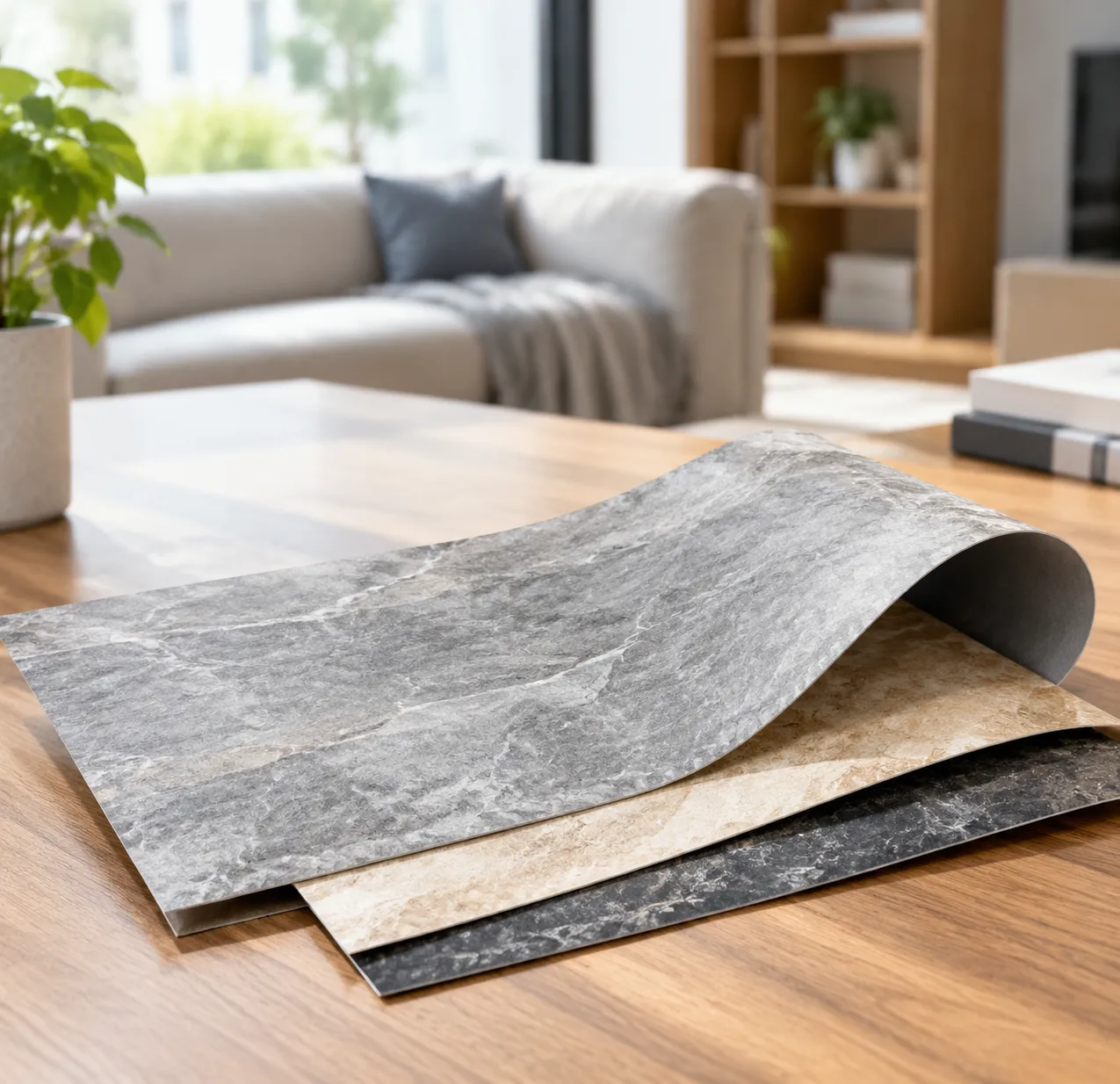
Flexible stone veneer is an engineered architectural facing that combines genuine natural stone surfaces with a high-performance, polymer-reinforced backing.
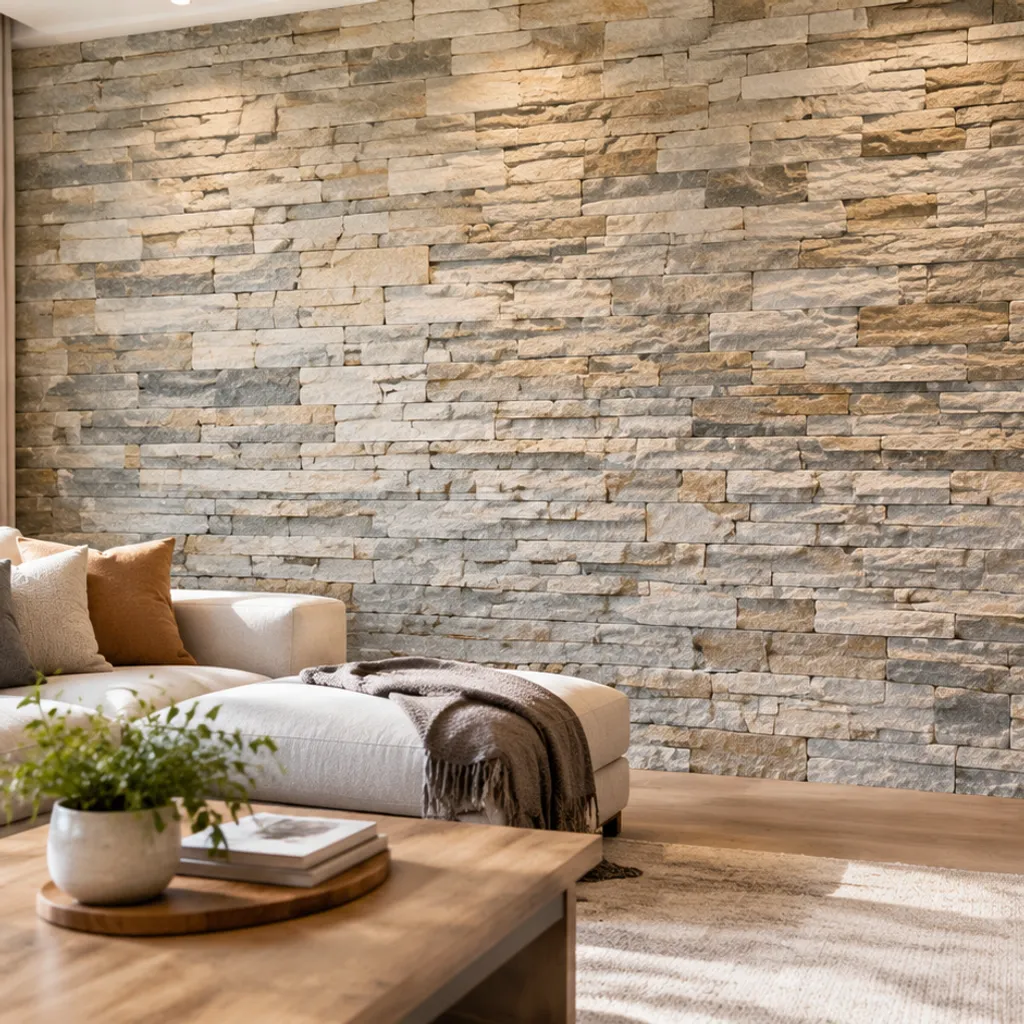
- Authentic Mineral Surface: Retains the distinct texture, color variation, and tactile feel of real stone.
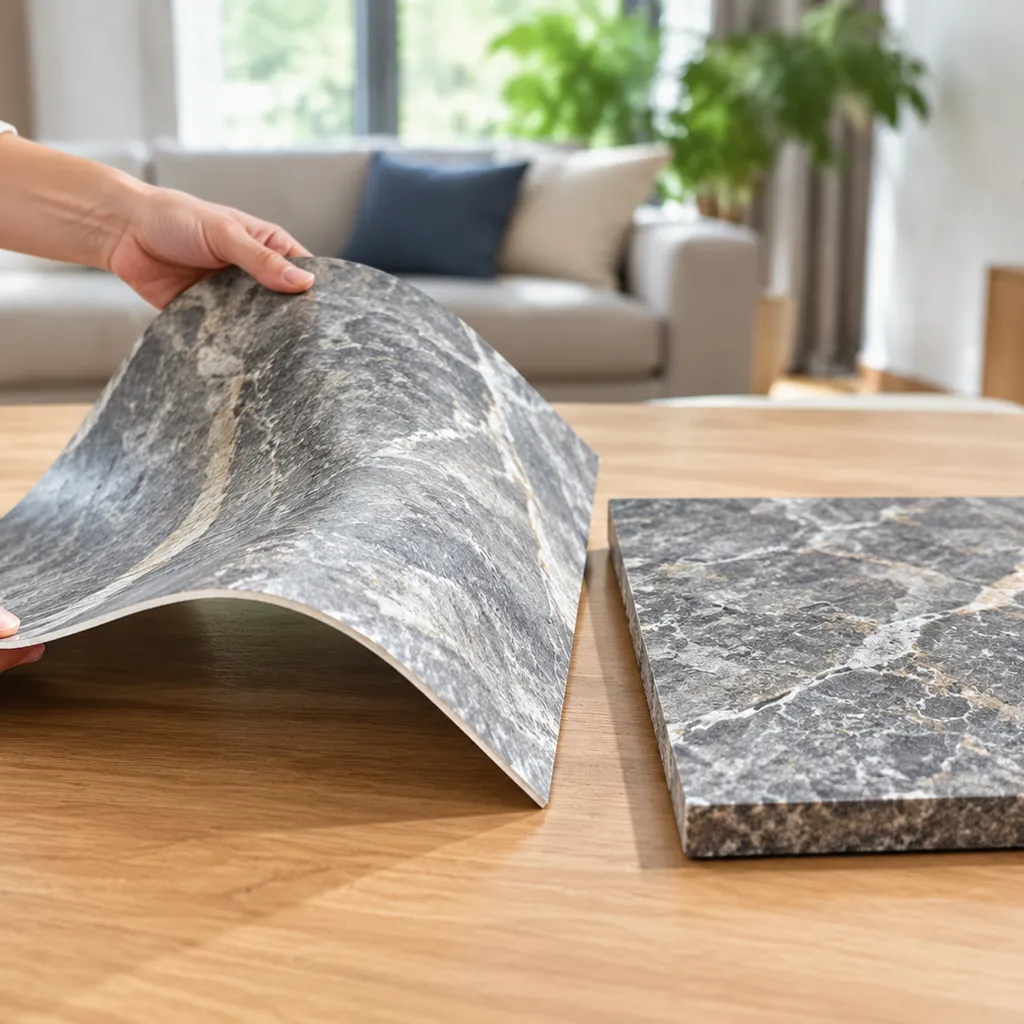
- Bendable Structure: Engineered to flex effortlessly over curved surfaces, columns, and irregular wall shapes.
- Ultra-Thin Profile: Highly compact, drastically reducing weight without sacrificing visual authenticity.
What Are Traditional Natural Stone Materials?
Traditional natural stone materials encompass thick, rigid dimensional stone cut directly from quarried rock formations, such as granite, marble, limestone, and slate.
- Massive Structural Density: Solid, unyielding slabs or tiles typically varying from 10mm to over 30mm in thickness.
- High Structural Weight: Requires substantial load-bearing capacity and robust structural anchoring systems.
- Rigid Geometry: Limited to flat applications unless custom-carved through expensive, labor-intensive machining.
Manufacturing Process and Material Composition
The fundamental distinction between these two solutions lies in how raw geological resources are processed and stabilized:
| Feature | Flexible Stone Veneer | Traditional Natural Stone |
|---|---|---|
| Primary Composition | Ultra-thin natural stone layer backed by fiberglass, polymer, or modified mineral matrix | 100% solid, unreinforced quarried stone slab |
| Production Method | Precision extraction/peeling from layered stone blocks followed by composite backing lamination | Heavy quarrying, mechanical gang-saw block slicing, surface honing, and edge dressing |
| Material Flexibility | High bend radius; easily conforms to 2D and 3D architectural contours | Rigid and brittle; breaks under bending stress |
| Material Handling | Easy to cut, handle, and bond with standard adhesives | Requires specialized heavy-duty cutting equipment and wet-saw stations |
Key Differences: Flexible Stone vs Traditional Stone
When comparing flexible stone vs traditional stone materials, the distinction comes down to weight, physical performance, and handling efficiency. We see these differences transform how architects and builders approach modern interior and exterior surfaces.
| Feature | Flexible Stone Panels | Traditional Stone Slabs / Tiles |
|---|---|---|
| Average Thickness | 2 mm to 4 mm | 15 mm to 30 mm+ |
| Material Weight | Ultra-lightweight (easy handling) | Heavy (requires load considerations) |
| Curved Applications | Direct wrap around columns & arches | Requires expensive custom cutting |
| Installation Method | Direct adhesive bonding | Wet mortar, ties, or heavy anchors |
| Job Site Cutting | Utility shears or standard hand tools | Heavy wet saws with diamond blades |
Weight, Thickness, and Structural Load
- Dead load reduction: Flexible stone veneer averages only 2 mm to 4 mm in thickness. This slim profile eliminates the need for structural wall reinforcement or heavy mechanical anchors.
- Structural safety: Traditional natural stone adds immense dead weight to foundations, exterior facades, and high-rise structures, requiring specialized engineering calculations.
- Handling convenience: A single worker can transport and lift large flexible sheets effortlessly, while traditional slabs demand heavy equipment or multi-person crews.
Flexibility and Adaptability for Curved Surfaces
The real game-changer in flexibility stone vs traditional stone materials is how they handle complex geometry.
- Effortless bending: Flexible stone conforms smoothly to circular columns, curved feature walls, barrel ceilings, and organic interior layouts.
- Zero custom tooling: Traditional solid stone requires costly, time-consuming CNC carving or specialized masonry cutting to achieve curved profiles.
- Design freedom: We can apply real stone textures to curved reception desks, furniture, and round architectural pillars without joint seams.
Installation Process and Labor Efficiency
- Fast adhesion: Flexible stone installs directly over drywall, concrete, wood, or existing tiles using high-strength adhesives.
- Clean and quiet cutting: You can cut flexible panels on-site with basic utility blades or shears, creating virtually no airborne dust or loud disruptions.
- Labor savings: Because the material is so light and fast to lay, installation teams finish projects in a fraction of the time required for traditional stone cladding, cutting labor costs significantly.
- No wet masonry mess: Eliminating heavy mortar beds and mechanical wall anchors keeps job sites cleaner and faster to manage.
Aesthetic Realism and Texture Variety
- Authentic surface depth: Flexible stone is engineered to showcase the genuine clefts, ridges, and mineral textures of natural rock surfaces.
- Consistent visual flow: You achieve the exact look of slate, travertine, sandstone, or marble without the flat, artificial appearance of printed imitations.
- Expansive pattern choices: While traditional stone is limited by quarry slab dimensions and transportable sizes, flexible stone allows seamless, large-format paneling across vast surface areas.
Durability and Performance Comparison
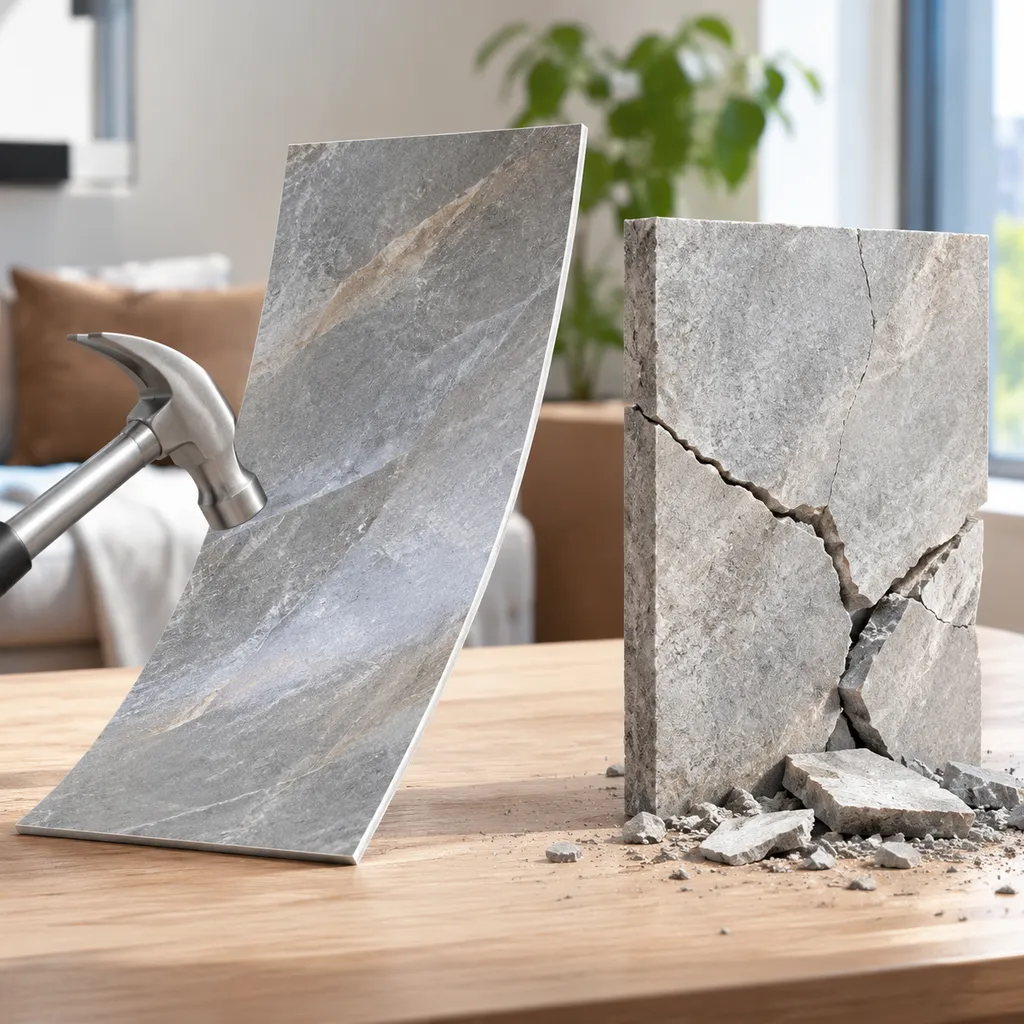
When evaluating flexibility stone vs traditional stone materials, durability goes far beyond surface hardness. We look at how each material responds to structural movement, climate shifts, and daily wear over time.
Impact and Crack Resistance
Traditional stone slabs are dense and rigid, making them prone to brittle fractures under mechanical stress or structural settling. Flexible stone veneers, on the other hand, incorporate a reinforced backing that allows for slight deflection and energy absorption.
- Flexible Stone: Absorbs minor vibrations and substrate movement without cracking. Highly resistant to chipping during handling and everyday contact.
- Traditional Stone: High compressive strength, but low tensile tolerance. Foundation shifts or heavy direct impacts often result in hairline fractures or clean breaks.
Weather, Temperature, and Moisture Resistance
Outdoor environments demand materials that can handle rapid freeze-thaw cycles, high humidity, and UV exposure.
| Performance Metric | Flexible Stone Materials | Traditional Stone Slabs |
|---|---|---|
| Freeze-Thaw Stability | High (Flexibility prevents spalling) | Moderate to High (Porous stones risk cracking) |
| Moisture Absorption | Very Low (Sealed composite structure) | Varies (Requires periodic water-repellent sealing) |
| Thermal Expansion | Adapts easily without stress fractures | Can crack if expansion joints are insufficient |
| UV Resistance | Mineral surface resists fading | Natural UV stability across all stone types |
Lifespan and Long-Term Maintenance Requirements
Both solutions offer exceptional longevity, but their upkeep requirements differ significantly:
- Maintenance Needs: Traditional stone requires routine sealing, regular grout inspections, and specialized stain removers. Flexible stone requires minimal upkeep, usually just standard washing with neutral cleaners.
- Service Life: Traditional masonry can last for decades or centuries when structurally sound. Quality flexible stone veneer provides a service life of several decades without degradation, delamination, or loss of visual texture.
Cost, Transportation, and Environmental Impact

Evaluating the financial and ecological footprint of flexibility stone vs traditional stone materials requires looking beyond the raw product price tag. Factoring in logistics, structural prep, and job-site labor reveals significant differences in total project expenditure and sustainability.
Material Costs vs Total Installation Expenses
Raw stone tile or slab costs only represent a fraction of the final invoice. When we compare full project outlays, the economic advantages of flexible stone become clear:
- Substructure and Framing: Traditional stone masonry often demands reinforced footings, metal ties, and heavy-duty structural backing to support the load. Flexible stone veneers adhere directly to existing drywall, concrete, or plywood without structural modifications.
- Labor Overhead: Installing heavy natural stone requires specialized masons, wet mortar mixing, and extensive setting times. Flexible stone installs rapidly with standard structural adhesives, cutting job-site labor hours by up to 50%.
- Tooling and Equipment: Standard stone cutting requires wet saws and heavy diamond blades. Flexible stone cuts cleanly with utility shears or basic hand tools, reducing equipment rental fees and power usage.
Shipping and Handling Efficiency
Logistics represent one of the largest hidden expenses in stone architectural projects.
- Payload Optimization: Traditional stone cladding weighs significantly more per square foot, consuming freight weight limits rapidly and requiring multiple haul trucks for large projects. Flexible stone is exceptionally thin and lightweight, allowing us to pack vastly more square footage into a single pallet or container.
- Site Handling and Damage: Moving traditional stone slabs on-site requires forklifts, cranes, and multiple laborers, with a constant risk of slab cracking. Flexible stone panels are easily carried by a single worker, reducing accidental breakage, staging time, and physical strain.
Eco-Friendliness and Carbon Footprint
Sustainable construction demands lower resource depletion and reduced transportation emissions:
- Resource Preservation: Flexible stone manufacturing extracts only the micro-thin functional surface of natural stone, maximizing the yield from natural quarries compared to thick slab dimensional cutting.
- Lower Transport Emissions: Lower freight weight translates directly into reduced fuel consumption and lower greenhouse gas emissions across the global distribution chain.
- Minimal Job-Site Waste: Flexible panels produce minimal dust, reduced off-cut scrap, and eliminate the need for heavy mortar disposal during clean-up.
Best Application Scenarios for Each Material
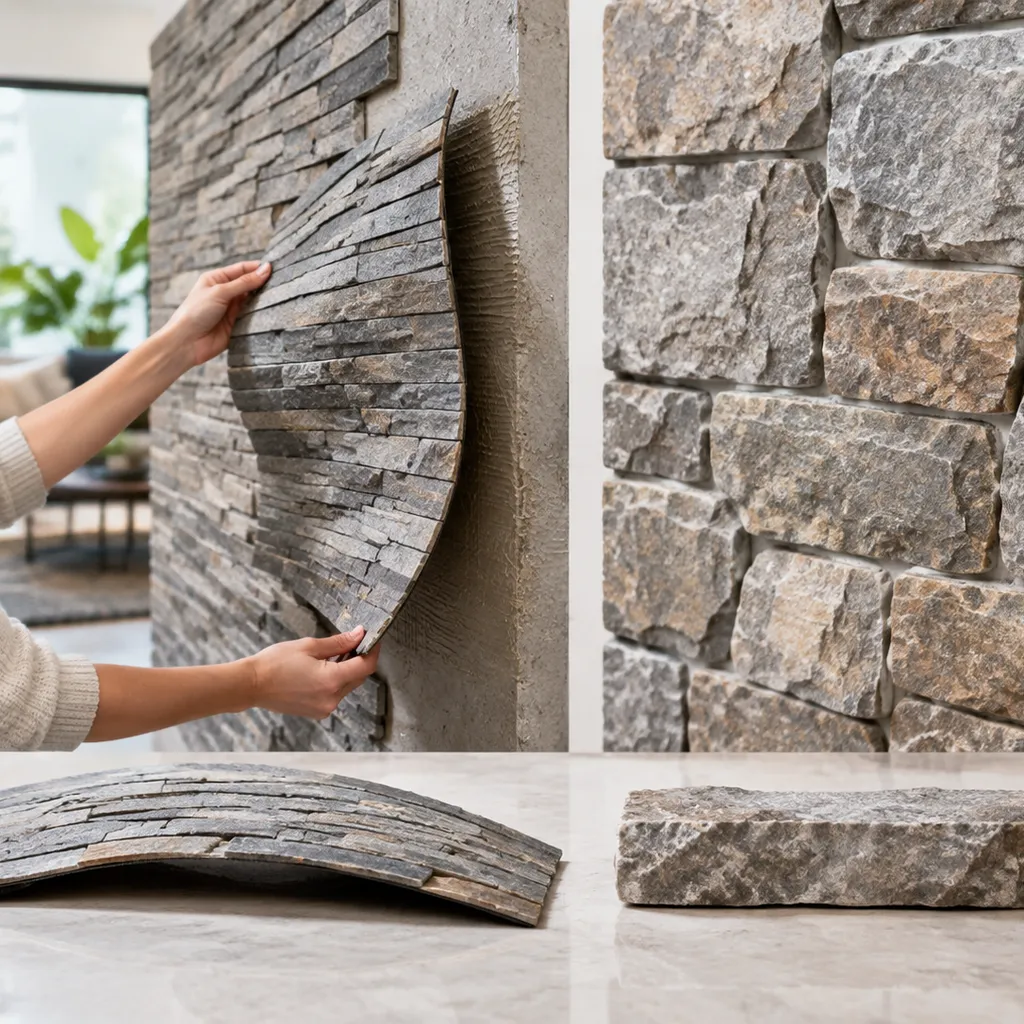
Choosing between flexibility stone vs traditional stone materials comes down to structural feasibility, design geometry, and site conditions. Both materials serve specific architectural roles, but their physical profiles make them suitable for distinctly different installations.
Top Applications for Flexible Stone Panels
Our flexible stone veneers excel in environments where weight constraints, surface curvature, and rapid installation take priority.
- Curved Walls and Architectural Columns: The natural bend of flexible stone allows seamless wrapping around circular pillars, barrel vaults, and arched corridors without costly custom masonry cuts.
- High-Rise Facades and Exterior Retrofits: Because the panels add minimal structural dead load, they are ideal for cladding tall building envelopes and modernizing existing building facades directly over old tile or concrete.
- Ceilings and Elevated Surfaces: Traditional stone is often dangerous or impractical overhead. Flexible stone panels provide authentic mineral textures for suspended ceilings and high-level soffits safely.
- Interior Feature Walls and Joinery: Perfect for boutique hotel lobbies, luxury retail counters, door skins, elevator interiors, and lightweight bespoke furniture finishes.
- Fast-Track Commercial Renovations: Projects operating on tight downtime schedules benefit from rapid dry-gluing methods that eliminate wet mortar staging.
Top Applications for Traditional Stone Cladding
Traditional stone slabs and dimensional masonry remain the standard for massive, ground-bearing structural builds that require deep profile depth.
- Load-Bearing Retaining Walls and Foundations: Ideal for heavy civil engineering, massive gravity retaining structures, and structural base courses where raw bulk provides ballast.
- Heavy Foot-Traffic Ground Paving: Best suited for public plazas, vehicular driveways, and municipal walkways that demand thick stone blocks capable of withstanding heavy axle loads.
- Deep-Relief Chiseled Architecture: Projects requiring 3D carving, deeply recessed rusticated facades, or historic masonry restorations where solid stone depth is non-negotiable.
- Submerged Aquatic Features: Traditional thick slabs are well-suited for heavy fountain basins and structural pool coping subject to constant water submersion and chemical exposure.
Making the Decision: Which Stone Material Should You Choose?
Choosing between flexible stone veneer and traditional stone materials comes down to your project's architectural demands, structural limits, and total budget. Both options provide a genuine stone aesthetic, but their physical profiles serve distinct construction requirements.
When to Choose Flexible Stone
We recommend flexible stone for projects prioritizing speed, weight reduction, and architectural versatility. It is the premier choice for:
- Curved and Non-Linear Surfaces: Wrapping columns, curved feature walls, and arches without complex custom stone cutting.
- Weight-Restricted Substrates: High-rise exterior facades, elevator interiors, ceilings, and drywall where heavy structural loads are prohibited.
- Direct Over-Tile Renovations: Retrofitting existing interiors without the noise, mess, and expense of demolishing older wall surfaces.
- Fast-Track Commercial Projects: Tight timelines where rapid installation and reduced freight costs keep the schedule and budget intact.
When to Choose Traditional Stone
Traditional natural stone slabs and masonry remain the standard when sheer mass and monolithic depth are the primary structural requirements. Choose traditional stone for:
- Heavy-Duty Flooring: Driveways, public plazas, and industrial floors exposed to heavy vehicular traffic.
- Freestanding Structural Walls: Retaining walls and self-supporting masonry that require mechanical dead weight for stability.
- Deep Carvings and Moldings: Custom architectural details requiring solid block carving, heavy profiled edges, or deep chiseling.
Key Selection Factors: Budget, Structure, and Design Goals
To determine the right fit for your build, evaluate your project across these core parameters:
| Decision Factor | Flexible Stone Veneer | Traditional Stone Materials |
|---|---|---|
| Substrate Load Capacity | Ideal for standard drywall, wood, and light framing | Requires reinforced concrete or structural steel support |
| Surface Geometry | Conforms easily to curves, angles, and flat walls | Limited to flat planes unless custom-machined at high cost |
| Total Project Cost | Lower shipping, handling, and labor expenses | Higher material, freight, and specialist installation costs |
| Installation Speed | Quick adhesion with standard polymer-modified adhesives | Slower process requiring wet mortar, anchors, or ties |
| Application Profile | Interior/exterior cladding, ceilings, feature walls | Heavy ground paving, structural masonry, thick countertops |
Balancing your design vision with physical site constraints ensures long-term performance and efficiency. For modern architectural cladding, lightweight retrofits, and curved designs, flexible stone delivers authentic surface appeal with unmatched practical advantages.