
Why Color Variation Occurs in Flexible Stone: Root Causes
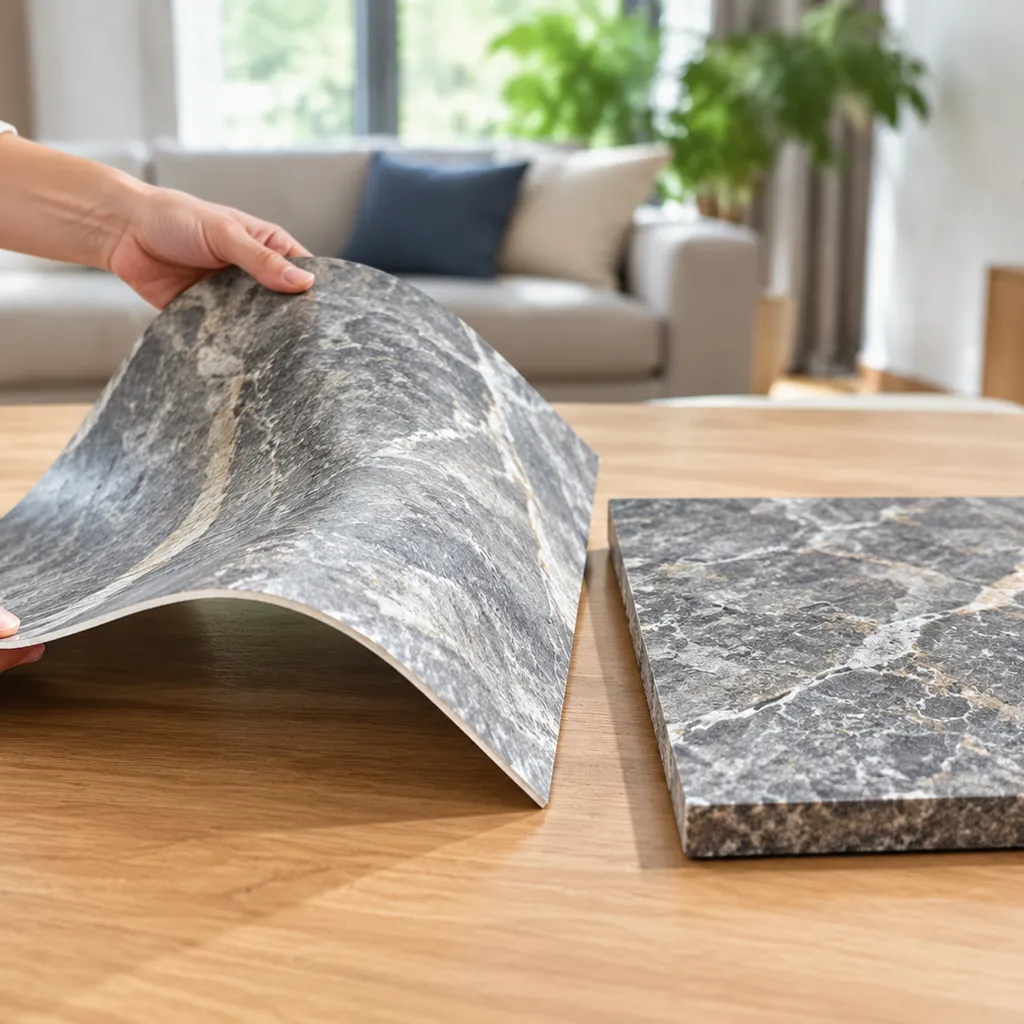
Color variation in flexible stone is not a defect; it is the natural signature of genuine mineral composition and technical thermo-forming. When architects and contractors notice subtle tonal shifts across panels, they are seeing the authentic interaction of raw earth elements and thermal processing.
Natural Raw Material Composition
We manufacture MCM flexible stone veneer using Modified Clay Material (MCM) blended with finely graded natural mineral powder aggregates. Unrefined Earth Pigments: We avoid flat, artificial dyes. The base coloration comes directly from crushed stone, clay, and inorganic mineral pigments. Granular Diversity: Natural variations in sand particle sizes reflect ambient light differently, altering how the base hue registers to the naked eye. Organic Matrix: The modified clay binder encapsulates raw aggregates without neutralizing their inherent earthy undertones.
Mineral Composition Shifts
Every extraction run from mineral quarries carries micro-variations in chemical and elemental balance: Trace Minerals: Minute differences in iron oxide, calcium carbonate, or silica deposits produce natural shifts in undertone, moving from warm ochres to cool grays. Tonal Gradients: Because raw aggregate veins vary within the ground, sequential sheets naturally develop soft tonal gradations across their surfaces rather than a stamped, repetitive finish.
| Factor | Primary Mechanism | Visual Impact |
|---|---|---|
| Mineral Purity | Quarry-level elemental variance | Soft shifts in base background tones |
| Thermo-Molding | Controlled radiant heat curing | Surface sheen and pigment depth changes |
| Batch Sourcing | Distinct harvest lots | Discernible lot-to-lot color transitions |
Curing and Temperature Dynamics
Our continuous sheet production lines rely on precision thermo-molding and dehydration. However, microscopic environmental fluctuations occur along the line: Thermal Exposure: Minor temperature differentials across multi-zone drying chambers alter the crystallization rate of the modified clay matrix. Humidity Fluctuations: Ambient moisture levels during the drying phase dictate how pigments settle near the surface versus deep in the core. Continuous Line Flow: The speed at which sheets pass through radiant heating elements introduces delicate, natural surface variations across a single continuous run.
Lot-to-Lot (Batch) Transitions
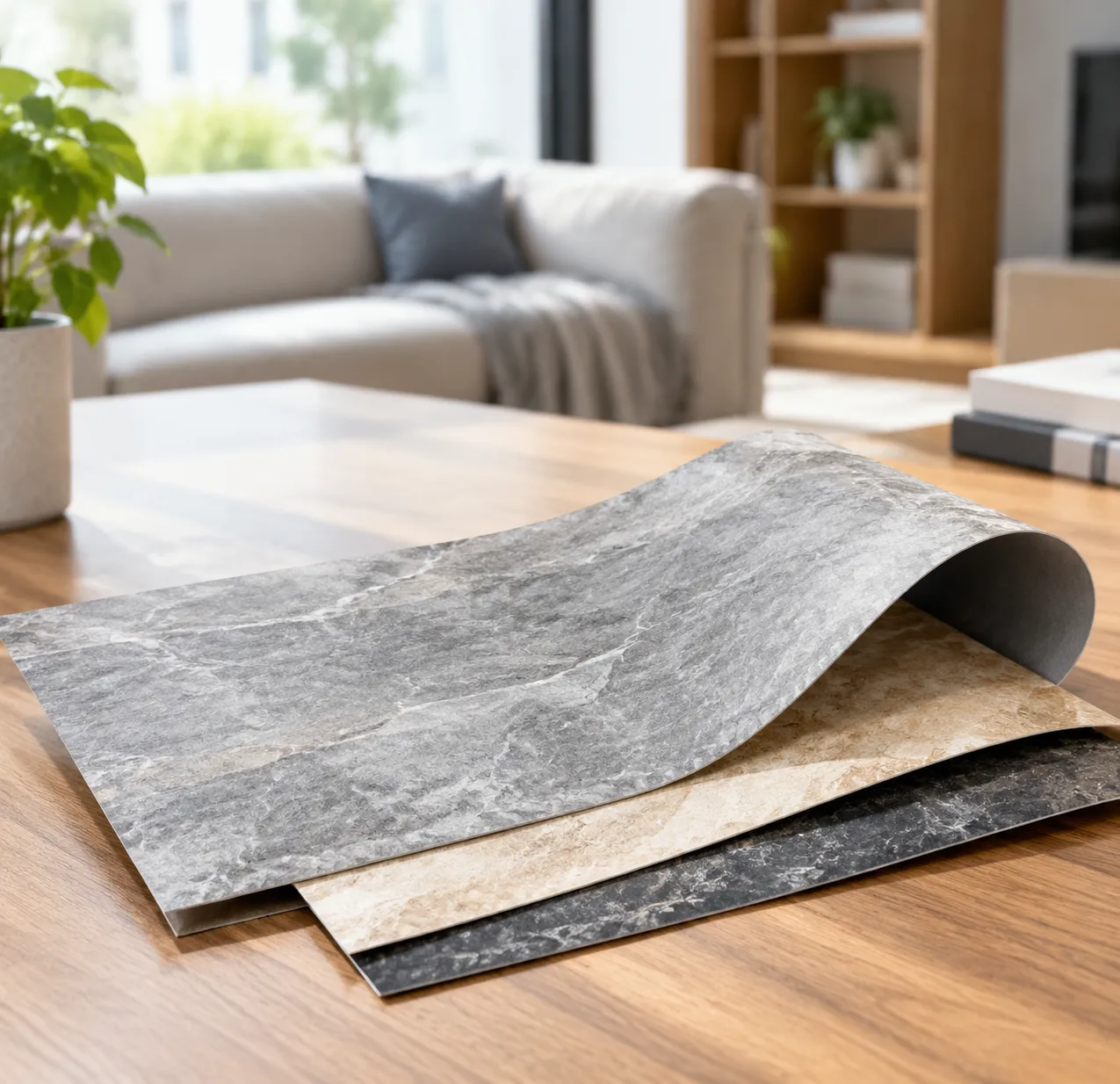
Batch-to-batch variation is an industry reality in architectural stone cladding. Sample Swatches vs. Bulk Orders: A pocket sample cut six months prior represents a single moment in raw mineral extraction. Bulk production lines will naturally feature minor chromatic drift from archival samples. Mockup Discrepancies: Pre-production jobsite mockups produced from pilot batches serve to confirm texture, installation behavior, and general color family rather than absolute, monolithic shade consistency. Scale Differences: When mineral pigments spread across thousands of square meters, macroscopic lighting conditions accentuate subtle lot differences that remain invisible on isolated 10x10 cm swatches.
How Texture and Surface Profiles Alter Color Variation in Flexible Stone
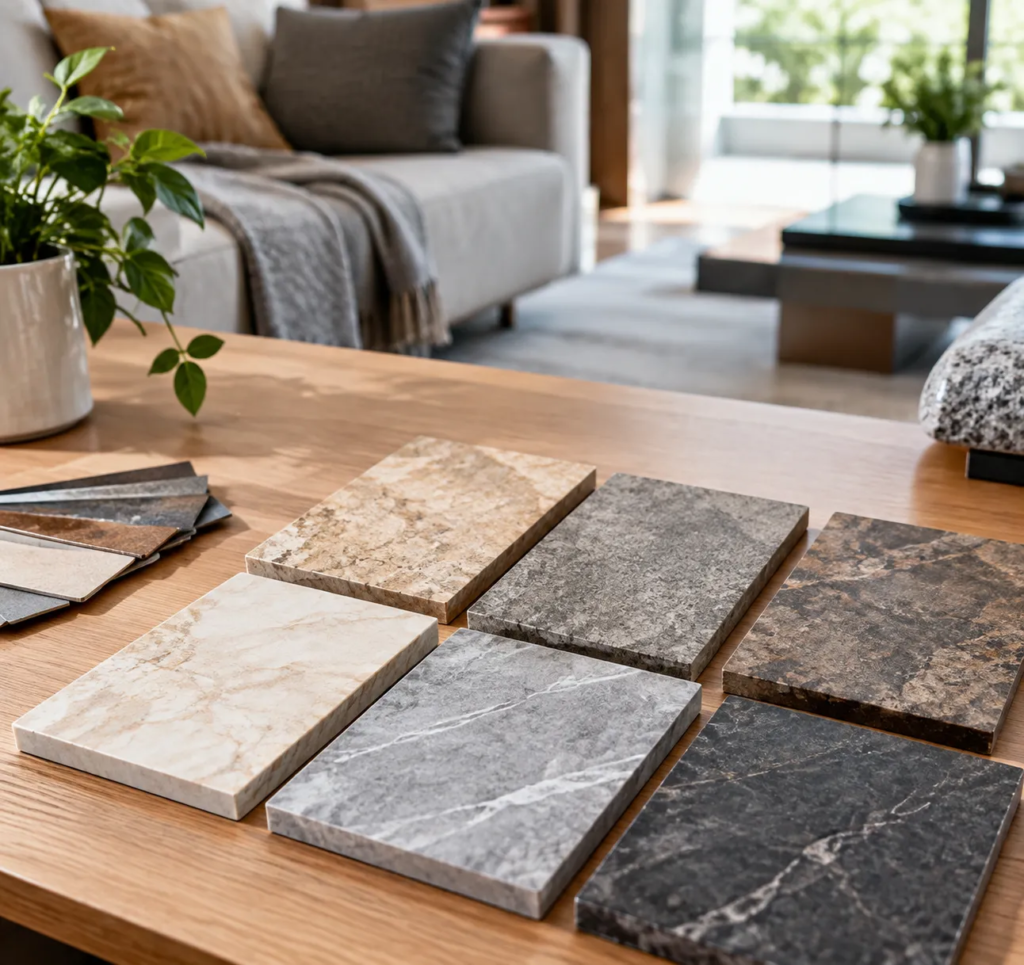
Surface geometry plays a decisive role in how our eyes interpret color tones on a finished wall. In flexible stone veneer, texture changes how ambient and directional light reflect off the surface, creating perceived shifts in tone even across panels with identical mineral pigmentation.
Flexible Travertine: Linear Cavities and Shifting Lighting
Our flexible travertine profiles feature organic, directional linear voids that actively interact with light sources: Light Angulation: Overhead downlights and grazing wall sconces cast deep shadows into linear pores, making panels look deeper and darker from sharp viewing angles. Directional Diffusion: Diffuse daylight softens cavity shadows, shifting the panel toward its lighter base hue. Orientation Uniformity: Installing panels with opposing cavity directions will create an apparent two-tone effect across adjacent sheets.
Slate Collection: Split-Rock Clefts and Contrast
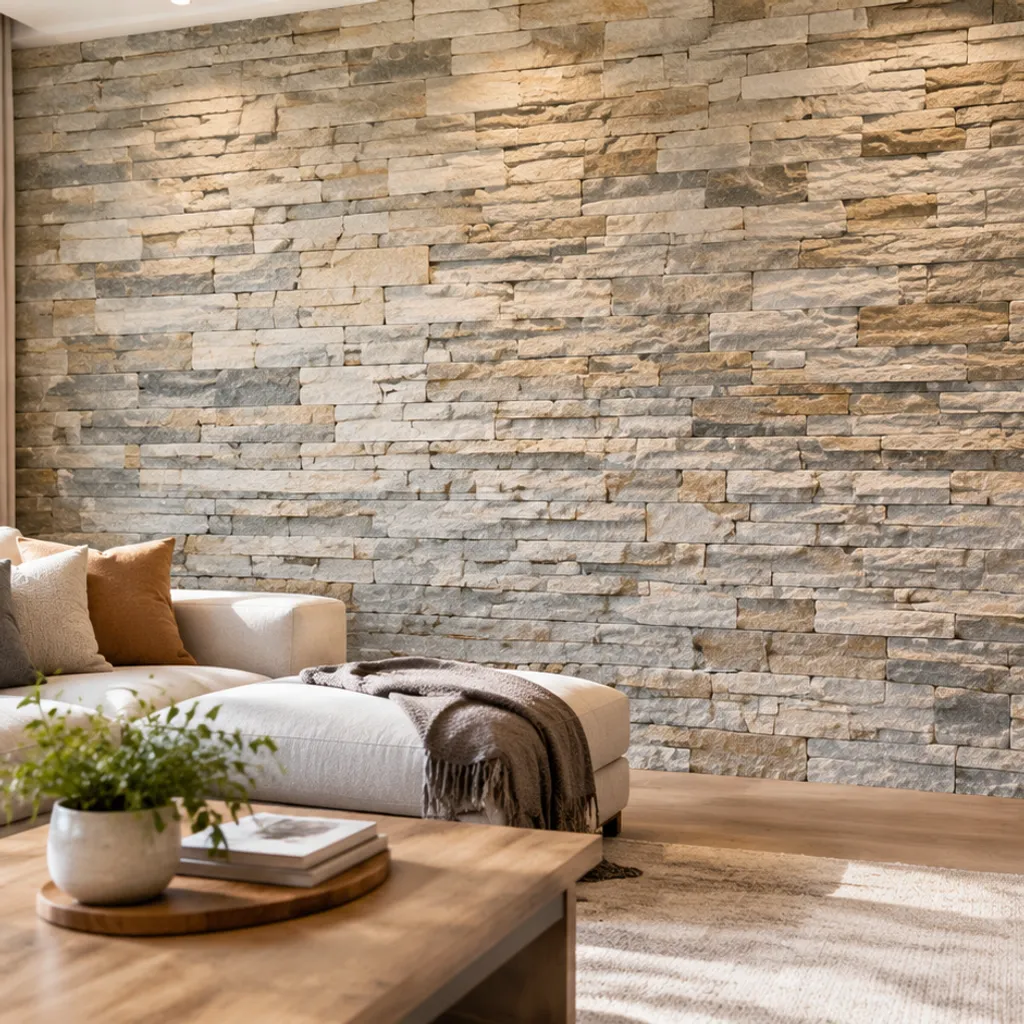
The split-face relief of our slate collection produces pronounced surface variations that accentuate natural chromatic depth: Multi-Layered Clefts: Raised stone ridges catch full illumination, while recessed clefts remain in partial shade, producing rich tonal contrast across contiguous panels. Natural Mineral Highlighting: Elevated cleft edges reflect light directly, making natural iron or mica mineral flakes appear brighter than flat field areas. Organic Variation: The multi-tiered surface profile creates a dynamic, authentic stone aesthetic where slight panel-to-panel color variance enhances visual realism.
Woven Linen and Fabric Textures: Directional Micro-Grooves
Fine-textured profiles like woven linen rely on precise micro-grooves that require strict alignment during installation: Matte Shadow Interlocking: Micro-grooves create a tight grid of microscopic shadows that deliver a smooth, matte finish. Viewing Angle Shifts: A single panel rotated 90 or 180 degrees will reflect light differently than its neighbors, creating an optical color mismatch. Directional Arrows: We stamp directional alignment marks on the back of all woven and linear panels to ensure consistent orientation and uniform light reflection across the entire layout.
Quality Standards: What Is an Acceptable Color Tolerance in Flexible Stone?
Evaluating color variation in flexible stone requires clear benchmarks. Because we manufacture MCM flexible stone veneer using natural components, slight shifts are normal, but they must always fall within defined architectural standards.
Shade Variation Rating (V1 to V4)
We categorize the acceptable color tolerance across production runs using the standard architectural V-rating system:
| Shade Rating | Visual Profile | Typical Application |
|---|---|---|
| V1 (Uniform) | Minimal to no tonal difference between sheets | Monolithic modern interior accent walls |
| V2 (Slight) | Subtle shifts in background tone with shared base pigments | Clean commercial façades and residential interiors |
| V3 (Moderate) | Noticeable grain, cavity, and tone shifts across panels | Flexible travertine and split-face cladding |
| V4 (High Variation) | Distinct, multi-tonal contrasts from sheet to sheet | Rustic slate collection cladding and organic exteriors |
Knowing your product's rating before installation helps set realistic expectations for both the client and the installation crew.
Batch Tolerances and Delta E (ΔE) Thresholds
To control lot-to-lot color consistency on job sites, we measure chromatic variance using Delta E (ΔE) readings under standard D65 illuminant conditions:
- ΔE < 1.0: Color shifts are imperceptible to the naked eye under direct sunlight.
- ΔE 1.0 to 2.0: Standard commercial tolerance for panels within the same production batch; shifts are virtually invisible once installed on large elevations.
- ΔE > 3.0: Clear visual mismatch. We reject panels exceeding this threshold for contiguous single-wall applications to prevent visible batch seams.
Natural Weathering and UV Color Fastness
Long-term stability depends directly on pigment selection:
- Inorganic Mineral Pigments: We formulate our flexible stone with inorganic earth pigments and modified clay materials. These compounds do not break down under direct UV radiation, resisting chalking, solar fading, and rain wash.
- Synthetic Dyes (Avoided): Chemical colorants may look bright initially, but they quickly oxidize, fade, and shift toward yellow or gray tones when exposed to weather on exterior façades.
Using stable mineral aggregates ensures that the natural color variation flexible stone exhibits on day one remains balanced and resilient for decades.
Jobsite Best Practices: Managing Color Variation in Flexible Stone
Proper handling on the jobsite ensures that natural shifts in tone enhance the design rather than create unwanted patchwork. We use proven installation protocols to balance tonal gradients across both interior feature walls and large exterior façades.
Pre-Installation Inspection & The Three-Box Rule
Never pull panels sequentially from a single carton. Even within the same production batch, slight shifts in tone occur naturally across sheets.
- Open multiple boxes simultaneously: Open at least three to five boxes before applying any adhesive.
- Mix and shuffle panels: Alternate sheets from different cartons as you install across the wall.
- Catch outliers early: Identify panels with extreme shade deviations and set them aside for perimeter cuts, base trims, or hidden corners.
Dry-Laying Layout Technique and Staging
Dry-laying is the most reliable method for achieving balanced substrate color blending before final bonding.
| Staging Step | Action Item | Target Outcome |
|---|---|---|
| 1. Floor Mockup | Lay out 10–20 square meters of panels flat on a clean staging floor. | Gives a true overview of the overall tone and contrast. |
| 2. Gradient Balancing | Swap adjacent light and dark pieces to eliminate concentrated color clusters. | Creates a smooth, organic transition across the entire surface. |
| 3. Approval Sign-off | Review the mockup under target project lighting conditions. | Prevents costly tear-outs and adhesive waste after installation. |
Handling Directional Grains and Textures
Surface profiles in our slate collection, woven linen, and flexible travertine feature micro-clefts that reflect light directionally. Installing panels in opposing directions creates artificial visual color variation, even when the base pigment is identical.
- Check the backing: Follow the directional arrows printed on the back of each MCM flexible stone veneer sheet.
- Keep orientation uniform: Align all panels with the grain running in the same direction unless a deliberate checkerboard pattern is specified.
- Verify under working lights: Check the wall from multiple viewing angles to confirm that shadow play does not produce false tonal breaks.
Grouting and Joint Selection
Joint compound selection directly impacts how the human eye registers color variation in flexible stone installations.
- Tone-Matched Joints: Using a grout color matched to the median shade of the veneer softens panel-to-panel transitions, creating a seamless, monolithic stone appearance.
- Contrasting Joints: A darker or lighter grout accentuates individual panel edges, drawing attention to grid lines rather than subtle batch color gradients.
- Seamless Butt-Jointing: For zero-grout designs, bevel or sand cut edges slightly to prevent exposed backing materials from breaking the color flow.
Commercial and Architectural Remodeling Solutions with YSQCERA
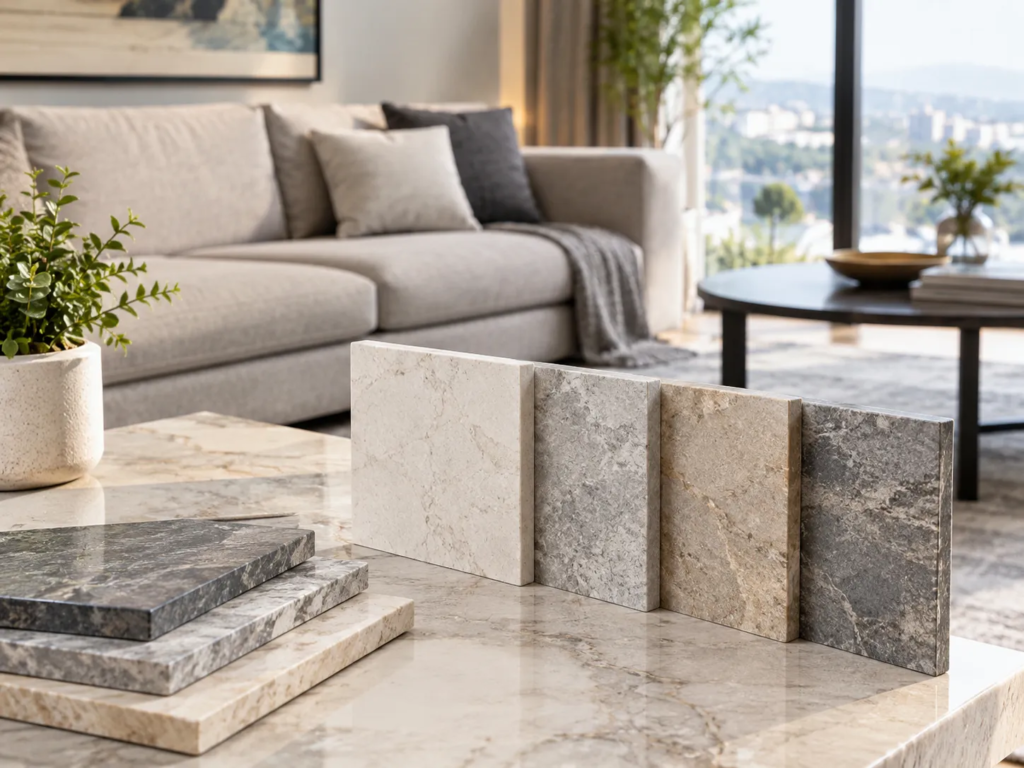
Managing color variation flexible stone panels across large-scale commercial builds requires strict manufacturing discipline and precise batch controls. At YSQCERA, we deliver dependable architectural remodeling solutions designed to eliminate unpredictable tonal shifts while preserving the rich, natural depth of mineral surfaces.
Precise Batch Consistency and Curing
Color control begins at the raw material phase. We eliminate extreme tonal swings through automated processing:
- Pure Mineral Selection: We strictly grade modified clay materials (MCM) and natural mineral powders to maintain accurate baseline pigments across every production run.
- Automated Thermal Curing: Computer-monitored curing chambers stabilize temperature and drying humidity, preventing the blotching and dark edge banding common in unmonitored lines.
- Consistent Core Chemistry: Uniform compound blending ensures predictable tone, sheet thickness, and density across full production runs.
Project-Specific Single-Batch Manufacturing
Mismatching pre-production mockups with mass delivery disrupts installation schedules. We solve this by syncing production directly to project scale:
| Phase | YSQCERA Quality Protocol | Jobsite Advantage |
|---|---|---|
| Color Target Validation | Lab-matched control swatches matched to designer specs | Exact tone confirmation before mass extrusion |
| Volume Run Execution | Entire order produced in a single continuous lot | Eliminates batch-to-batch variation across elevations |
| Lot Verification | Digital spectrophotometer checks across sheet runs | Keeps visual shift well within acceptable color tolerance |
For large interior accent walls and exterior façades, our single-run fabrication ensures your main cladding, corner profiles, and reveal trims match seamlessly without jarring section breaks.
Engineered Aesthetic Control for High-End Cladding
High-end hospitality, retail flagships, and luxury multi-family developments require a precise balance: surfaces must look genuinely organic without appearing defective or poorly sorted.
- Authentic Mineral Movement: Our MCM flexible stone veneer delivers subtle, natural tone gradients without artificial print repeats.
- Predictable Layout Planning: Tight color banding simplifies dry-laying, allowing installation teams to achieve balanced visual flow with less staging time.
- Durable UV Stability: Inorganic mineral pigments remain colorfast under harsh exterior weathering, preventing uneven fading between sun-exposed and shaded panels.
Frequently Asked Questions (FAQs)
Will flexible stone fade or change color over time outdoors?
No, high-grade MCM flexible stone veneer maintains its structural hue under harsh exposure. Because we formulate our panels using natural mineral pigments rather than synthetic dyes, the material delivers outstanding UV color fastness & weathering resistance.
- Inorganic stability: Resists solar bleaching and acid rain degradation.
- No yellowing: Formulated without unstable resins that discolor over time.
- Long-term performance: Keeps its authentic tone across exterior facades for decades.
How do I calculate and order enough flexible stone to avoid running into a different production lot?
To eliminate noticeable lot-to-lot color consistency shifts, always order your entire project volume in a single run. We recommend calculating exact surface area plus a standard overage buffer to cover jobsite cuts, detailing, and future repairs.
| Project Type | Waste Factor Buffer | Primary Reason |
|---|---|---|
| Standard Flat Walls | Add 10% | Straight cuts, edge alignments, and perimeter trimming |
| Complex Facades & Columns | Add 15% to 20% | Curved wrapping, intricate niche cuts, and pattern balancing |
| Attic Stock / Future Repairs | Add 5% | Securing exact batch-matched panels for later maintenance |
What should I do if one sheet appears visibly darker than the adjacent panel during installation?
When managing natural color variation flexible stone materials on site, treat tonal shifts proactively before setting adhesives:
- Pause immediately: Do not install isolated high-contrast panels next to light sections without a planned transition.
- Implement dry-laying: Pull panels from at least three separate boxes simultaneously to stage a smooth gradient across the wall.
- Check panel orientation: Rotate the darker sheet 180 degrees. Directional textures like flexible travertine and woven linen reflect light differently based on orientation.
- Reposition to break lines: Move outlier panels to perimeter edges, base rows, or transition zones where natural room shadows soften the visual contrast.
Can sealers, enhancers, or topcoats change the color tone and sheen of flexible stone veneer?
Yes. Topcoats, penetrative sealers, and wet-look enhancers directly influence final surface refraction, color depth, and sheen.
- Matte Penetrating Sealers: Protect against moisture while leaving the original shade and low-sheen profile unaltered.
- Color Enhancers: Deepen undertones and pull out high-contrast veining in our slate collection cladding, creating a darker, richer finish.
- Gloss Topcoats: Increase light reflectivity, which can amplify apparent surface variations under direct lighting.
- Best Practice: Always perform a test application on an uninstalled scrap panel before coating the entire wall assembly.